

Kauthar Anumba Khaleel
Across Nigerian universities, AI laboratories are being established, workshops organised for lecturers, and policies drafted to guide the use of artificial intelligence. What do these initiatives tell us about a university’s readiness for AI?
They tell us a university has started, and the people behind these steps deserve credit. Whether the university is ready is a separate question.
Readiness shows up after those steps have been taken. It is how well people handle what AI changes about the core work of a university: how lecturers teach and assess, how researchers do their research, how students learn. And it is whether the institution’s systems support them in doing so. That is the difference between doing AI and being ready for AI.
Think of a university that acquired new, and specialised equipment. Buying the tools, running an orientation session, and posting safety rules on the wall are sensible first steps. But readiness is different: do people know how to apply the tools effectively in real work, is there infrastructure to run them, and is technical support on hand when something breaks?
Consider teaching and learning. A lecturer attends an AI training workshop and learns how to use AI to prepare lecture notes, generate quiz questions, or create presentations. These are useful starting points, but AI readiness raises a larger question about pedagogy and assessment.
When students have access to tools that can explain concepts, generate answers, and complete tasks traditionally used to demonstrate understanding, how do lecturers verify that real learning has taken place? Shifting assessment from polished final essays toward reasoning, local context, and brief oral or practical defences helps – even in large classes. Yet individual lecturers cannot make that shift alone; faculties and Senate committees must update rigid assessment rules so lecturers actually have room to adapt.
Research presents a similar challenge. AI can accelerate literature exploration, data analysis, transcription, and drafting – expanding what researchers can achieve. Yet a researcher who relies on AI-generated summaries without engaging with the original literature risks missing key distinctions, disagreements, or insights essential to rigorous work. The technology can save time while compromising depth.
The institutional question is whether supervisors and ethics committees are themselves equipped to spot AI-glossed scholarship and evaluate data privacy risks, and whether postgraduate training builds those habits before shortcuts take hold.
Institutional policies are equally important, but only if they guide decisions in practice. Picture a lecturer with a pile of assignments that read a little too smoothly. Does the policy clarify what students may use AI for, and who to ask when it is unclear? Or a researcher who wants to upload interview transcripts into an AI tool: does the policy state whether that is permissible? A policy that sits in a file without guiding daily choices offers limited protection.
These initiatives also need to connect, because their value multiplies when they reinforce one another. In practice, they often sit in silos: policy with one committee, training with an ICT unit, and teaching inside the faculties. Bridging that gap requires clear ownership – such as a cross-functional Senate working group or designated faculty leads, accountable for ensuring training, policy, and classroom reality align.
All of this rests on a practical foundation. A university’s plans cannot assume that lecturers and students have equal access to paid AI tools or reliable internet connectivity. That should not stop an institution from moving ahead, but it must shape how it moves. Assessments, training, and expectations built around the access people actually have will always outperform plans built around the access leadership assumes.
And readiness is ongoing. As AI capabilities evolve, universities must continuously review their approaches and adapt. A laboratory shows investment, a workshop shows engagement, and a policy shows intent. None, by itself, shows readiness.
A simple test can show where an institution stands. Have faculties been empowered to adapt how they assess students in light of what AI can now do? And when a lecturer, a supervisor, or a student is unsure, do they know where to go for a clear answer? These are modest questions, but they reveal whether those early steps are doing their work.
Doing AI is adopting the tools. Being ready for AI is reshaping the work, and the systems around it,.so those tools are used effectively and responsibly.
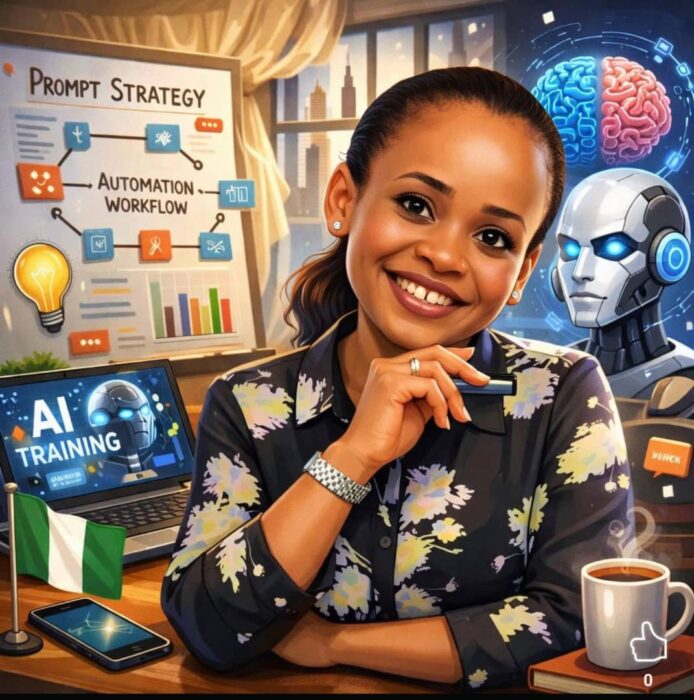
Kauthar Anumba Khaleel is an AI trainer and consultant. She is the founder of First Ascent Strategies, where she works with professionals, teams, and institutions to make AI practical and immediately applicable to real work.
We’ve got the edge. Get real-time reports, breaking scoops, and exclusive angles delivered straight to your phone. Don’t settle for stale news. Join LEADERSHIP NEWS on WhatsApp for 24/7 updates →