

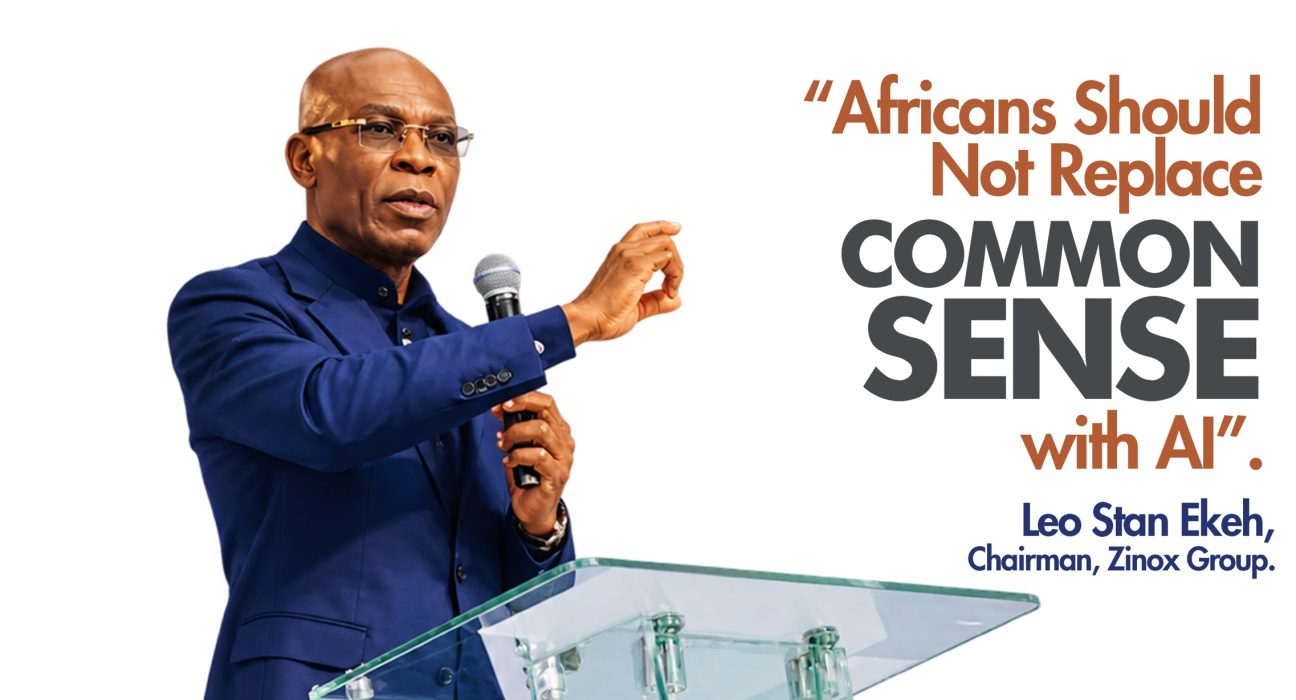
Leo Stan Ekeh, chairman of Zinox Group, has warned that Africa has just two years to make a defining choice between remaining dependent on foreign technology and developing the capacity to become a global technology leader.
Ekeh said the continent must urgently invest in indigenous technology businesses, digital infrastructure, research and technical expertise or risk remaining a consumer of technologies designed and controlled by other economies.
He made the call during an interaction with young entrepreneurs and information technology professionals following a recent visit to SpaceX’s main Intelligence Station in Seattle, Washington, at the invitation of the American aerospace company founded by Elon Musk. He was accompanied on the visit by his wife, Chioma Ekeh, chief executive officer of TD Africa Distributions, an authorised distributor of Starlink in West Africa.
According to Ekeh, Africa’s technological future will depend on whether its entrepreneurs can move beyond importing and deploying foreign solutions to building systems capable of competing in international markets.
He argued that the continent has the human potential to participate meaningfully in the global technology economy but must demonstrate greater ambition in developing businesses, infrastructure and intellectual capacity.
His warning comes as artificial intelligence, cloud computing, satellite connectivity and other emerging technologies increasingly shape how businesses, governments and economies operate.
Ekeh also cautioned that while artificial intelligence presents enormous opportunities, Africans must not allow their growing dependence on the technology to weaken independent thinking and practical judgement.
He argued that AI systems can generate information, conduct research and recommend solutions, but their outputs must be assessed against the cultural, economic, social and political realities of African societies.
He described the responsible application of AI as “Digital Holy Science”, stressing that technology should expand human capabilities rather than replace the ability to reason and make decisions.
Read also: MTN Uganda turns to Starlink to close rural business connectivity gaps
Africa’s dependence on foreign technology
For Ekeh, the urgency of building indigenous technology capacity is reinforced by the risks associated with relying heavily on foreign technology platforms.
The recent global disruption affecting Microsoft’s 365 services, including Outlook, Teams and Copilot, illustrated how problems within a major international technology ecosystem can disrupt businesses and organisations across different countries.
Such disruptions, he argued, demonstrate the importance of developing local alternatives and strengthening Africa’s ability to build, maintain and control critical technology systems.
However, building indigenous capacity does not necessarily mean abandoning international partnerships. Rather, Africa needs the technical expertise and infrastructure to develop its own solutions while retaining the ability to integrate with global technology providers.
Ekeh’s concerns reflect a broader challenge facing African economies as digital transformation accelerates. While businesses and governments increasingly depend on foreign cloud services, software, hardware and digital platforms, the continent’s participation in the technology value chain remains an important question.
He maintained that African entrepreneurs should be more ambitious about developing products and companies that address local problems and compete internationally.
Ekeh’s record of building technology businesses
Drawing on his entrepreneurial journey, Ekeh highlighted several businesses he has established across different segments of Nigeria’s technology industry as examples of what indigenous enterprise can achieve.
His technology journey dates back to 1987, when he founded Task Systems, which introduced desktop publishing and computer graphics to Nigeria, transforming processes in the media and publishing industries.
In 1996, he established Stanoil in partnership with the then Elf Oil to introduce digital dispensing pumps at petrol stations.
He subsequently founded Zinox Technologies in 2001, building what became one of Sub-Saharan Africa’s internationally certified computer brands, with certifications from Intel and Microsoft.
Through TD Africa, he also developed a technology distribution business connecting more than 18 Fortune 100 and Fortune 500 companies, alongside other international technology brands, to African markets.
The group’s acquisition of Konga in 2018 further expanded its operations into e-commerce and omnichannel retail.
These businesses, according to Ekeh, reflect the importance of building local enterprises that can participate in different parts of the technology value chain rather than limiting Africa’s role to consuming imported products.
He acknowledged, however, that efforts to develop indigenous technology infrastructure have not always succeeded. His earlier attempt to establish stronger local data centre capabilities more than two decades ago encountered significant challenges and financial losses.
The experience, he noted, highlighted the scale of investment and supporting infrastructure required to sustain technology businesses in Africa, particularly reliable electricity, technical expertise and favourable government policies.
Read also: Starlink’s revenue jumps 69% to $5.2bn as SpaceX’s connectivity business expands
Government’s role in Africa’s technology future
Ekeh also called on African governments to move beyond policy declarations and provide the foundations needed for indigenous technology businesses to grow.
These include reliable electricity, affordable broadband, research funding, technology-focused education, digital infrastructure and transparent procurement processes that allow credible local innovators to compete for opportunities.
He stressed that governments must create policies that encourage local manufacturing, research, enterprise development and the deployment of homegrown technology solutions.
Without these foundations, entrepreneurs may struggle to scale their innovations, leaving businesses and public institutions increasingly dependent on systems developed outside the continent.
As AI adoption accelerates globally, Ekeh believes Africa must develop the researchers, software developers, data professionals, infrastructure providers and entrepreneurs needed to participate in building the technology.
The challenge, therefore, is not simply to increase access to artificial intelligence or other emerging technologies but to develop the capacity to create and improve them.
For Africa’s younger generation, his message was that technological competence must go hand in hand with critical thinking, creativity and entrepreneurship.
The continent cannot afford to remain satisfied with being a technology market when it has the potential to become a technology producer and contributor to global innovation, he argued.

Royal Ibeh is a senior journalist with years of experience reporting on Nigeria’s technology and health sectors. She currently covers the Technology and Health beats for BusinessDay newspaper, where she writes in-depth stories on digital innovation, telecom infrastructure, healthcare systems, and public health policies.