

Nigeria’s opposition parties are facing mounting security threats and legal disputes 52 days before the 2027 general elections, putting pressure on their ability to campaign freely and sustain momentum ahead of the polls.
The latest developments include a gun attack on the campaign entourage of Ovie Omo-Agege, a former deputy senate president in Delta State and a court ruling invalidating his nomination as the Nigeria Democratic Congress (NDC) candidate for Delta Central Senatorial District the following day.
The incidents have heightened concerns over the safety of candidates and their supporters, freedom of political participation and the growing uncertainty surrounding candidates’ eligibility as the election approaches.
Gunmen attacked Omo-Agege’s campaign entourage in Uduerecommunity, Ughelli North Local Government Area, on Monday, killing four people and injuring several others.
Omo-Agege described the attack as premeditated and alleged that it was the fifth attempt on his life. He credited Department of State Services (DSS) operatives attached to him with ensuring his escape.
“Right there at the venue, while they were shooting, we could hear them say, ‘It is Omo-Agege we want to kill. We must kill Omo-Agege,’” he said.
“After God, the only reason I am alive today is because of the DSS operatives who were with me,” he added.
Following the attack, the Delta State Government imposed an indefinite curfew in Ughelli North, restricting movement between 6 pm and 6 am. Secretary to the State Government, Kingsley Emu, announced the measure as authorities moved to contain the security situation.
The state government dismissed allegations linking Sheriff Oborevwori, the governor to the attack, describing them as unsubstantiated. Oborevwori condemned the killings, calling them “unacceptable and a grave threat to the peace and security of the state”.
“No political ambition or disagreement could justify the destruction of lives and property,” he said.
The police said they had commenced an impartial investigation, including an examination of the conduct of officers present at the scene.
Read also: Court nullifies Omo-Agege’s NDC nomination, orders INEC to delist him
Court voids Omo-Agege’s nomination
The attack was followed by a legal setback for Omo-Agege, as the Federal High Court in Warri on Tuesday invalidated his nomination as the NDC candidate for Delta Central Senatorial District.
In a ruling delivered by Justice Hyeladzira Ajiya Nganjiwa, the court directed the Independent National Electoral Commission (INEC) to remove his name from the list of candidates for the 2027 election and barred him from presenting himself as the party’s candidate for the constituency.
The court also held that the statutory period for conducting fresh primaries to nominate a replacement had expired, citing the Electoral Act provision requiring political parties to nominate candidates not later than 180 days before the general election.
The suit, marked FHC/WR/CS/120/2026, was filed by Alexander Osondu Akpodiete, who challenged the legality of Omo-Agege’s emergence as the NDC candidate.
The plaintiff questioned Omo-Agege’s resignation from the All Progressives Congress, his membership of the NDC and his eligibility to participate in the party’s senatorial primary.
Justice Nganjiwa first dismissed five preliminary objections filed by Omo-Agege, the NDC and INEC challenging the competence of the suit.
On the substantive issues, the judge found that the NDC failed to comply with the Electoral Act’s requirements for submitting its membership register to INEC before the primary election.
The court specifically observed that Omo-Agege’s name was absent from the membership register submitted to the electoral commission at least 21 days before the primary. It also held that the party failed to provide sufficient evidence that the register had subsequently been updated and submitted within the prescribed period.
The ruling adds to the legal challenges confronting political parties as preparations for the 2027 elections intensify, with questions over candidate eligibility threatening to complicate campaign plans.
Political violence spreads across states
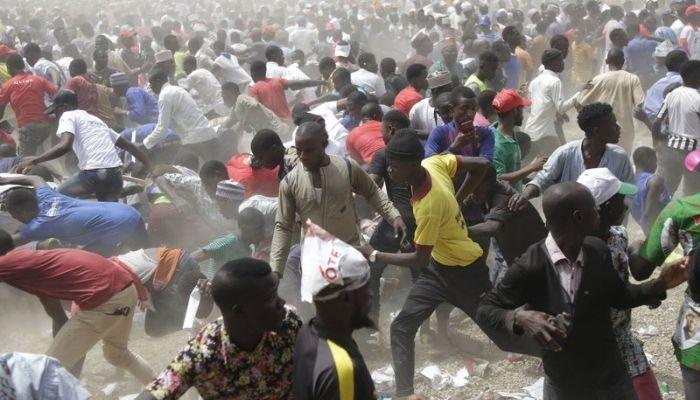
Omo-Agege’s attack is part of a wider pattern of violence involving political rallies, campaign convoys, party meetings and supporters across the country.
At least 28 people have been killed in political violence in Nigeria in 2026, with scores injured and electioneering activities disrupted, according to incidents documented ahead of the 2027 general election.
A report by the African Centre for Security, Governance and Development (CentreSGD) recorded 70 physical election-related attacks across 19 states and the Federal Capital Territory between January 1 and October 27. The incidents left 27 people dead in 20 attacks. At least one additional death was recorded during the November 7 violence in Asaba, Delta State.
The attacks have affected candidates and supporters of several political parties, with the NDC among the most frequently targeted in the incidents documented.
On September 13, gunmen attacked an NDC statewide ward meeting in Ihuani Awkunanaw, Enugu State, injuring at least eight members and destroying party materials, canopies and chairs. Another attack on an NDC gathering in Afa, Udi Local Government Area, on October 10 resulted in the death of Ifeanyi Nwolie.
In Oyo State, Azeez Tajudeen, 40, died on October 14 after supporters of Accord governorship candidate Oriyomi Hamzat were attacked with stones during a procession in Molete, Ibadan.
An October 22 attack on the convoy of Rollins Offia-Nwali, the NDC candidate in Ebonyi State, left one person dead and three others injured. His vehicle was set ablaze, although he escaped.
In Delta State, one person was killed and five injured during violence involving an NDC and Obidient Movement procession along Nnebisi Road, Asaba, on November 7, according to the police.
Other candidates and political figures have also come under attack.
On October 6, gunmen attacked the convoy of Herberta Okonofua, African Democratic Congress (ADC) senatorial candidate for Edo Central, and party chieftain Kenneth Imasuangbon in Igueben, Edo State. Both escaped, but a supporter, Jerry Oliha, was shot.
In Sokoto, ADC governorship candidate Manir Dan’iya was attacked near the airport on October 31, leaving two security personnel injured. DSS operatives later evacuated him.
The convoy of Peter Obi, NDC presidential candidate, was attacked around Watt Market Roundabout in Calabar, Cross River State, on November 4. Assailants smashed vehicle windscreens with sticks and machetes, while police subsequently arrested a suspect.
On November 11, armed thugs attacked the campaign convoy of Isa Pantami, the Peoples Democratic Party governorship candidate in Gombe. Two days later, hoodlums invaded an NDC town hall meeting in Oregun, Lagos, injuring supporters and damaging vehicles.
President Bola Tinubu’s motorcade was also attacked with stones after Juma’at prayers at the Shehu Shagari Central Mosque in Abuja on November 13. Police arrested 78 suspects, who were subsequently released on the President’s order.
Police warn politicians against violence
Amid the rising attacks, the Nigeria Police Force has declared zero tolerance for political violence ahead of the 2027 general elections, warning politicians, political parties and their sponsors against recruiting, financing or deploying thugs to intimidate opponents and disrupt political activities.
Olatunji Disu, Inspector-General of Police, said the police would investigate and prosecute individuals involved in political violence, irrespective of their political affiliation, position or influence.
Disu gave the warning on Tuesday in Abuja at a stakeholders’ meeting on political violence and security during political activities.
He said recent incidents involving violent clashes among political supporters, attacks on campaign venues and convoys, the use of dangerous weapons, intimidation of political opponents and disruption of lawful political gatherings posed serious threats to public peace and democratic stability.
According to him, the developments were warning signs requiring urgent intervention before they escalated into broader national security challenges.
“No political ambition is worth the life of a Nigerian, and no electoral victory is worth the destruction of our national peace,” he said.
“The Nigeria Police Force will not take sides in political contests, but we will take a firm stand against anyone who threatens the peace. We will not protect political interests; we will protect the Nigerian people,” he added.
Read also: Keyamo urges Delta governor to act as political violence leaves four dead in Ughelli
Calls for tougher action
The growing violence has also triggered calls for stronger action by electoral and security authorities.
On November 17, the Senate urged INEC to enforce provisions of the 2026 Electoral Act that provide for the disqualification of candidates linked to electoral violence.
The resolution followed a motion by Senator Abdul Ningi, who cited attacks involving political leaders, including Tinubu, Obi, Rabiu Kwankwaso and Atiku Abubakar, as well as violence in Delta and other states.
Senate President Godswill Akpabio said candidates or supporters found instigating violence should face the consequences under the law.
“Any candidate or supporter caught instigating violence, then INEC has the right to disqualify,” he said, adding that such a candidate should be disqualified irrespective of party affiliation.
Former President Goodluck Jonathan had also warned that some political parties were increasingly operating their campaign organisations like cult groups, raising concerns about the recruitment and use of young people for political violence.
With presidential and National Assembly elections scheduled for January 16, 2027, and governorship and state assembly elections on February 6, the growing attacks and court disputes are putting pressure on political parties, INEC and security agencies to safeguard candidates, supporters and the electoral process.

Taofeek Oyedokun is a correspondent at BusinessDay with years of experience reporting on political economy, public policy, migration, environment/climate change,…