

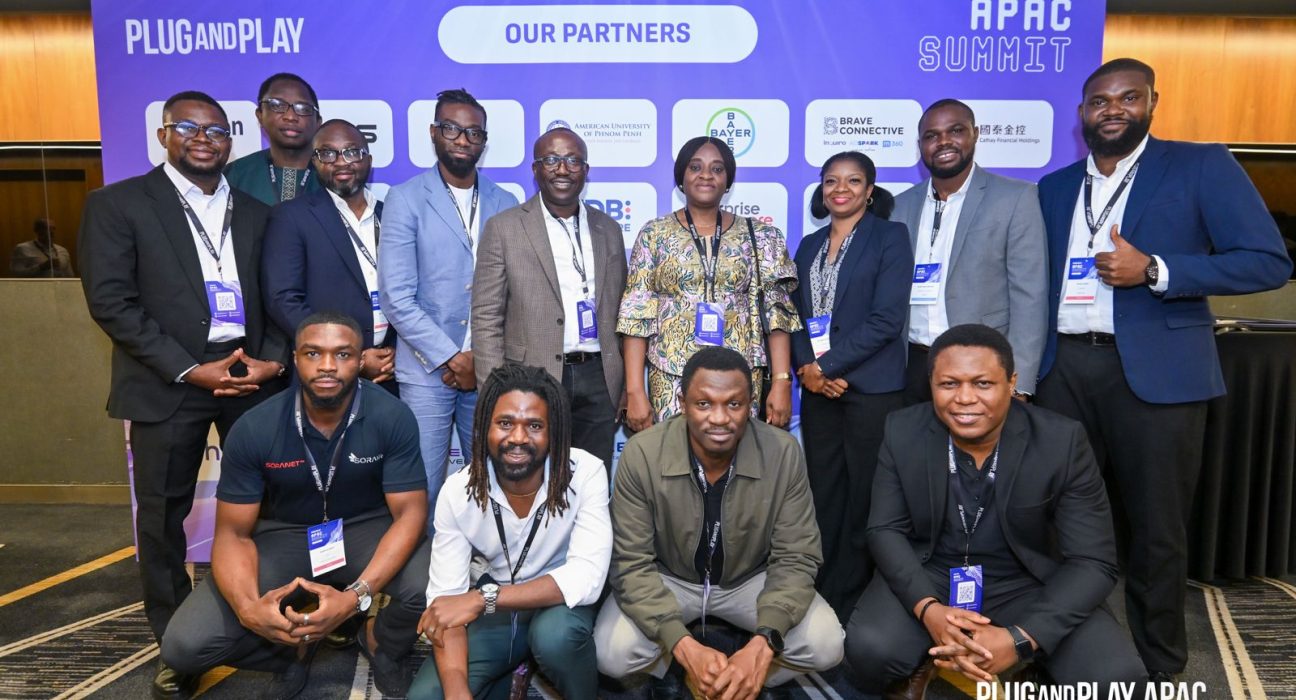
The Nigerian High Commission in Singapore has pledged to support Nigerian maritime professionals seeking to strengthen the country’s blue economy through strategic partnerships, policy recommendations and the adoption of Singapore’s maritime development and innovation models.
The High Commission gave the assurance during an engagement with a delegation of Nigerian professionals exploring opportunities to leverage Singapore’s expertise in maritime development, technology, research and startup innovation to improve Nigeria’s marine and offshore sectors.
The commitment would provide a platform for stronger institutional collaboration between Nigerian maritime professionals, Singaporean agencies and relevant government institutions in Nigeria, particularly in the areas of technical capacity development, research, innovation and policy reforms.
However, the High Commission clarified that its support would not involve direct financial assistance but would focus on facilitating strategic relationships and connecting the delegation with relevant institutions and government authorities.
It encouraged the professionals to submit formal reports, policy documents and portfolios detailing their ongoing projects and proposed collaborations to enable the mission to review and recommend them to appropriate authorities in Nigeria.
The delegation said its engagement with Singapore was driven by the need to identify practical models that could be adapted to Nigeria’s maritime industry, especially in research, technical expertise and innovation.
Working with Plug and Play, the group is developing research and industry trend reports aimed at establishing a common framework for government agencies and other stakeholders operating within Nigeria’s energy and maritime sectors.
According to a statement by the Commission, a major component of the initiative is the proposed adoption of the Ecosystem Compatibility Model (ECM), a policy advisory framework designed to align national development priorities with industry requirements.
The delegation said the framework would help address institutional gaps and strengthen coordination among government, academia and industry, noting that fragmented approaches and the tendency of government agencies to operate independently could undermine efforts to develop the sector.
It stressed the importance of building stronger relationships between academic institutions, industry players and policymakers to ensure that research findings translate into practical solutions for Nigeria’s maritime and offshore industries.
The professionals also identified technical capacity development through the Centre for Marine and Offshore Technology Development as a critical part of their agenda.
They proposed strengthening research and professional knowledge through peer-reviewed journals covering marine engineering, offshore technology, naval architecture and sustainable energy development.
According to the delegation, developing indigenous research capacity and technical expertise would be essential to positioning Nigeria to take advantage of emerging opportunities in marine and offshore operations.
On maritime infrastructure, the group raised concerns about the technical challenges affecting the effective utilisation of existing facilities, citing the Baro Inland Port as an example.
It argued that investment in port infrastructure must be accompanied by adequate technical studies and operational planning to ensure that such facilities deliver their intended economic benefits.
The delegation specifically highlighted the need for comprehensive bathymetric surveys to establish the depth and changing conditions of waterways, particularly during the dry season when fluctuations in water levels could affect vessel movement.
It said such assessments were necessary to determine the operational capacity of inland ports and establish whether they could support vessel operations throughout the year.
The professionals maintained that infrastructure development without sufficient technical data could limit the effectiveness of investments and leave critical maritime facilities underutilised.
They also called for greater reliance on data-driven research to inform policy reforms, particularly in local content regulations and the development of indigenous capabilities needed for deep-sea exploration.
The delegation identified stronger institutional relationships between the Nigerian Ports Authority and Singapore’s port authorities as important to improving operational standards, exchanging technical knowledge and strengthening Nigeria’s maritime administration.
It further drew attention to Nigeria’s estimated 10,000 kilometres of inland waterways, describing the network as an important economic resource that requires deliberate technical planning, investment and appropriate policy decisions to unlock its potential.
According to the professionals, effective utilisation of the waterways could expand economic opportunities within the blue economy and strengthen the contribution of marine transportation and related industries to national development.
Responding to the proposals, the High Commission urged the delegation to provide a comprehensive portfolio of its activities, research initiatives and proposed partnerships, explaining that formal documentation would provide a basis for facilitating engagements with relevant institutions in Singapore.
Among the institutions identified for possible collaboration were the Agency for Science, Technology and Research (A*STAR) and the National Research Foundation, which could provide opportunities for research cooperation and technical knowledge exchange.
The discussions also examined Singapore’s coordinated approach to innovation, enterprise development and the commercialisation of research, particularly through institutions such as Enterprise Singapore and the Economic Development Board.
Participants noted that Nigeria could draw lessons from Singapore’s startup support structures, innovation sandboxes and stronger corporate participation in research and development.
They said adapting aspects of these frameworks to Nigeria’s economic and institutional environment could encourage innovation, strengthen private-sector participation and improve the translation of research into commercially viable solutions.
The engagement also highlighted the importance of establishing an enabling environment in which government policies, private-sector investments and academic research complement one another in driving maritime development.
Representatives of the High Commission commended the delegation for its commitment to Nigeria’s development, expressing pride in the patriotism and determination of professionals seeking practical solutions to the country’s maritime and economic challenges.
The mission reiterated its willingness to serve as a strategic link between the Nigerian professionals and relevant institutions in Singapore, while encouraging the group to ensure that its proposals were properly documented and supported by clear research findings.
The meeting ended with an agreement to sustain communication, with the delegation expected to submit its policy papers, research reports and formal proposals to the High Commission for review and possible onward engagement with relevant Nigerian authorities.