

Unveils national traceability plan, targets 1.4m tonnes dairy output
By Olasunkanmi Akoni
The Federal Government has unveiled plans to transform Nigeria’s livestock sector into a commercially driven industry, targeting a potential $3.2 billion beef export market and an increase in annual domestic milk production to 1.4 million metric tonnes within five years.
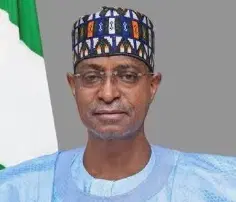
The Minister of Livestock Development, Dr. Muktar Maina, disclosed this in Lagos while delivering a keynote address at the Second National Council on Livestock Development.
The two-day summit, themed, “From Rebirth to Transformation: Advancing Livestock Development for National Prosperity,” brought together federal and state government officials, researchers and private investors to assess progress and chart a roadmap for the sector.
Maina said the country needed a coordinated transition from fragmented traditional livestock practices to a modern commercial system capable of generating revenue, creating jobs and addressing recurring farmer-herder conflicts.
He noted that two years after the establishment of the ministry, the focus must shift from institutional development to measurable economic outcomes.
Reviewing the ministry’s achievements, the minister listed the launch of the National Livestock Growth Acceleration Strategy and the Nigerian Livestock Master Plan, as well as the registration of eight new pasture species, the first in 48 years.
On animal health, Maina disclosed that the government was expanding annual vaccine production capacity at the National Veterinary Research Institute, Vom, from 120 million to 850 million doses.
He also announced plans to commission seven Model Veterinary Hospitals, five solar-powered cold-storage facilities and model pastoralist settlements in Yobe and Adamawa states.
The minister said 21 states had established dedicated livestock agencies, while 30 states were participating in the World Bank-assisted Livestock Productivity and Resilience Project.
He, however, cautioned against disconnected policies among states, proposing a unified national regulatory framework covering animal identification, traceability, disease reporting and meat certification through a central data platform.
According to him, the framework would allow states to adapt implementation to their respective ecological conditions while maintaining common national standards.
Beef export, dairy production
Addressing the need to modernise the red-meat value chain, Maina cited Lagos as an example of the infrastructure challenges confronting the sector, noting that more than 90 per cent of the 2.9 million cattle consumed annually in the state were processed at the Oko-Oba open slaughter slabs.
He said the ministry had identified accessible international red-meat markets worth more than N3.2 trillion annually, while Nigeria’s longer-term beef export potential was estimated at about $3.2 billion.
The minister clarified that the figures represented market opportunities rather than existing export earnings.
“Our immediate task is therefore to establish credible export statistics through identification, traceability, certification, and customs coordination.
“We cannot claim export success merely because an opportunity exists. We must produce, certify, ship, and record it,” he said.
On dairy production, Maina said the government was targeting an increase in annual domestic milk output from 700,000 to 1.4 million metric tonnes within five years.
He said the target would be pursued through partnerships with major processors, including Arla Foods, Nestlé, Promasidor and Ikun Dairy.
The minister added that state-led livestock development centres would provide artificial insemination, veterinary services and milk-cooling facilities to encourage voluntary sedentarisation and reduce long-distance cattle movements.
He said the initiative would also help address recurring conflicts between farmers and herders.
Maina urged private investors to explore opportunities in ranching, feedlots, cold-chain logistics, domestic vaccine manufacturing and leather production.
Lagos seeks stronger collaboration
In her address, the Lagos State Commissioner for Agriculture and Food Systems, Ms Abisola Olusanya, called for stronger collaboration among states to modernise livestock production, improve animal protein supply and strengthen value chains linking production centres with major consumption markets.
She said sustainable livestock development required an integrated food systems approach covering animal production, feed supply, veterinary services, processing, transportation, cold-chain infrastructure and market development.
Olusanya described the establishment of the Federal Ministry of Livestock Development in July 2024 by President Bola Tinubu as a significant institutional step towards addressing longstanding challenges and unlocking the sector’s economic potential.
She said the ministry was established to provide a coordinated framework for improving productivity, attracting private investment, generating employment and developing sustainable solutions to farmer-herder conflicts.
The commissioner noted that livestock development offered opportunities beyond primary production, including meat and dairy processing, cold-chain logistics, transportation and other ancillary businesses.
She said Lagos faced particular challenges because of its large population and limited landmass, making collaboration with states possessing stronger livestock production capacities necessary to ensure affordable and reliable supplies of animal protein.
“As one of the largest consumption centres in the country, with limited land relative to the size of our population, we have had to think differently about livestock development and, indeed, about agriculture in its entirety,” she said.
Also speaking, the Special Adviser to the Lagos State Governor on Agriculture and Food Systems, Dr. Oluwarotimi Fashola, reaffirmed the state’s commitment to implementing the resolutions of the council.
Fashola said upgrading the livestock value chain was critical to national food security and public health, noting Lagos’s position as one of West Africa’s largest livestock markets.
Stakeholders seek implementation
Earlier, the Permanent Secretary of the Ministry, Dr. Chinyere Akujobi, represented by Mr. Peter Alike, acknowledged that despite Nigeria’s abundant livestock resources and growing market, low productivity, inadequate infrastructure and fodder shortages continued to limit the sector’s economic potential.
She urged the council to serve as a platform for addressing policy bottlenecks and developing practical solutions rather than becoming a routine annual gathering.
Similarly, the Chairman of the House of Representatives Committee on Livestock Development, Mr. Wale Raji, urged the ministry to translate its policy frameworks into tangible improvements in the livelihoods of Nigerians.
Citing the National Livestock Growth Acceleration Strategy, Raji said the government was targeting an increase in the sector’s economic contribution from $32 billion to at least $74 billion by 2035.
He pledged legislative support and effective oversight by the House of Representatives to advance the sector’s development.
The President of the Veterinary Council of Nigeria, Prof. Matthew Adamu, also commended President Tinubu for establishing a dedicated Ministry of Livestock Development, describing it as the first of its kind since independence in 1960.
He urged stakeholders to support the renewed government attention with clear industrial benchmarks and measurable targets over the next decade.