


Follow THISDAYLIVE on GoogleAdd us as a preferred source to see more of our stories in Google
Lower fuel costs can save fleet operators significant funds, but this depends on having enough CNG stations, making tax waivers important to Nigeria’s transport sector, Sunday Okobi writes.
Nigeria’s push to expand gas-powered mobility is gaining momentum as the federal government’s removal of VAT and import duties on CNG vehicles, conversion kits, and related equipment begins to reshape the economics of transportation.
The incentives could lower entry costs for motorists and fleet operators while creating fresh opportunities across the automotive value chain, but their long-term impact will depend on infrastructure, financing, and reliable gas supply.
For Nigeria’s transport operators, the cost of fuel is only one part of the equation. The price of acquiring a vehicle, converting it to an alternative fuel, sourcing spare parts, maintaining the powertrain, and keeping vehicles on the road all determine whether a cheaper fuel ultimately translates into cheaper mobility.
This is where the federal government’s decision to remove Value Added Tax (VAT) and import duties on Liquefied Petroleum Gas (LPG), Compressed Natural Gas (CNG) and related equipment becomes significant beyond the energy sector.
Although the incentives were introduced to make gas more accessible and encourage investment, their implications are increasingly being felt in transportation, particularly as Nigeria seeks to expand CNG-powered mobility.
For an industry grappling with high operating costs, the removal of taxes on CNG equipment and conversion components could lower some of the financial barriers facing motorists and commercial transport operators seeking alternatives to petrol and diesel.
From gas policy to mobility policy
The journey towards the tax exemptions gained momentum in 2023 when the Nigeria Liquefied and Compressed Gases Association (NLCGA) took its concerns to the presidency through an advocacy engagement with Olu Verheijen, Special Adviser to President Bola Ahmed Tinubu on Energy.
The association highlighted the pressure created by VAT and import duties on LPG, CNG and the equipment required to store, transport, distribute and use gas.
For the mobility sector, the issue was particularly important because CNG adoption depends on more than the availability of natural gas.
It requires conversion kits, cylinders, valves, dispensers, compressors, trucks, safety equipment and other components.
When these items attract additional taxes and duties, the cost is eventually reflected in the investment required by operators and, potentially, the price paid by vehicle owners.
The NLCGA subsequently submitted detailed proposals outlining areas requiring government intervention and also called for stronger coordination among government agencies responsible for policies affecting the gas industry.
The engagements that followed with the Office of the Special Adviser and the Federal Ministry of Finance eventually produced policy measures aimed at reducing some of those costs.
On November 28, 2023, the government provided for zero import duty and VAT on LPG and a range of essential equipment. The relief covered items such as gas cylinders, cascades, leak detectors, pipes, valves, dispensers, generators and LPG trucks.
A subsequent directive in December extended similar treatment to CNG equipment, strengthening the fiscal framework around the emerging gas-for-mobility market.
Why the exemption matters to motorists
The economics of CNG conversion are relatively straightforward.
A vehicle owner considering conversion must weigh the initial cost against the expected savings from using CNG. If the equipment, installation, and related components become more expensive because of taxes and import duties, the period required to recover the investment becomes longer.
That can discourage private motorists and commercial operators from making the switch.
The removal of VAT and import duties, therefore, has the potential to reduce the upfront cost of conversion and improve the business case for CNG.
This is particularly important for high-mileage vehicles
For a commercial bus, taxi, haulage truck or delivery vehicle that operates for several hours every day, fuel represents a significant proportion of operating expenditure. An alternative fuel becomes attractive when the cost of conversion and the availability of refueling infrastructure are also manageable. The fiscal incentives seek to address part of that equation. They also have implications for companies importing fully CNG-powered vehicles. By removing applicable import duty and VAT on qualifying vehicles and equipment, the government is creating an additional incentive for businesses to consider gas-powered fleets.
Expert view
For Ladi Falola, President of the Nigeria Liquefied and Compressed Gases Association (NLCGA), the tax incentives should be viewed as part of a broader effort to build a viable gas market rather than simply as measures for reducing government revenue.
Falola said reducing the fiscal burden on CNG equipment could encourage investment and make the transition to gas-powered transportation more attractive to motorists and fleet operators.
He stressed, however, that tax relief alone would not deliver the desired transformation.
According to him, “Greater investment in CNG refuelling infrastructure, reliable gas supply, technical capacity, appropriate financing and policy consistency would be necessary to sustain the transition.”
The NLCGA President also sees the development of the CNG market as an opportunity to deepen activity across the domestic automotive and gas value chains, particularly through local assembly, technical services and equipment supply.
Fleet transition gathers pace.
Nigeria’s CNG transition has increasingly moved from policy announcements to fleet-level decisions. Large commercial operators are exploring the technology as they seek to contain fuel expenditure and reduce exposure to petrol and diesel price volatility. Dangote Cement, for instance, has announced plans to transition substantial portions of its fleet to CNG-powered vehicles. For businesses operating hundreds or thousands of vehicles, the economics can be compelling.
A reduction in fuel expenditure multiplied across a large fleet can produce significant savings. But those savings can only materialise if vehicles have reliable access to CNG. This makes the tax exemptions part of a much larger mobility equation.
Lower conversion costs without adequate refuelling stations could leave vehicles underutilised. More filling stations without sufficient demand could undermine investment returns. And cheaper conversion equipment without adequate standards and trained technicians could create safety and reliability concerns.
The policy, therefore, needs to be viewed as one component of a developing CNG ecosystem rather than a standalone solution.
Infrastructure remains the test.t
Nigeria’s transition to CNG is happening against the backdrop of a transport sector already under pressure from high vehicle operating costs, inadequate infrastructure and expensive maintenance. The emergence of CNG creates an opportunity to reshape some of those economics, but it also exposes infrastructure gaps.
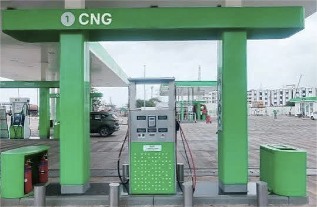
CNG vehicles require appropriate compression, storage and dispensing infrastructure. Conversion centres need trained personnel and equipment. Spare parts must be readily available. Vehicle owners also need confidence that they can refuel without making significant detours or facing prolonged queues.
This is where the removal of taxes on equipment could have a wider impact.
Lower import costs can make it easier for investors to acquire the equipment needed to establish and expand CNG infrastructure. As more operators enter the market, competition could improve availability and service delivery.
The objective should, therefore, go beyond getting more vehicles converted. It should be to build a functioning market around those vehicles.
More than a tax incentive
The CNG policy also fits into the Government’s broader attempt to diversify Nigeria’s transportation fuel mix.
For decades, petrol and diesel have dominated road transportation, leaving motorists highly exposed to changes in fuel prices and supply conditions.
CNG offers another option, particularly for high-mileage commercial vehicles.
But the transition cannot be sustained by tax exemptions alone.
The industry still needs consistent policies, investment in refuelling infrastructure, reliable gas supply, standards enforcement,nt and affordable financing for vehicle conversion.
Even where the cost of conversion falls, many commercial drivers and small fleet operators may still struggle to raise the capital required to convert their vehicles. Access to credit, leasing arrangements and fleet financing could therefore determine how widely the technology spreads beyond large corporations.
The development of local manufacturing and assembly of conversion equipment could also become increasingly important. If Nigeria eventually produces a larger proportion of the equipment required by the CNG market locally, the country could reduce its dependence on imported components while creating opportunities for manufacturers, technicians and other businesses within the automotive value chain.
A boost for automotive industry
The implications of the tax policy extend beyond motorists. A growing CNG market creates opportunities for vehicle dealers, conversion centres, component suppliers, mechanics, engineers, transport companies and energy businesses.
As more vehicles move towards gas, demand will grow for specialised maintenance and technical services. This could produce a new layer of expertise within Nigeria’s automotive industry.
Workshops that traditionally focused on petrol and diesel vehicles will increasingly need technicians trained to work safely on CNG systems. Parts distributors will need to understand the requirements of gas-powered vehicles. Insurance and inspection businesses will also have to adapt to a changing vehicle population.
In this sense, the CNG transition could become an industrial policy as much as a fuel policy.
The more equipment and services that can be produced and supplied locally, the greater the potential economic benefit beyond fuel savings.
The road to 2030
The NLCGA has set an ambition of increasing annual LPG consumption to five million metric tons by 2030 while supporting wider adoption of gas in transportation. The government’s tax exemptions provide an important starting point by reducing some of the costs associated with importing gas and mobility equipment. But their ultimate success will depend on whether the benefits translate into lower acquisition costs, more investment and greater consumer access. For investors, the question is whether Nigeria can create a market large and stable enough to justify investment in infrastructure and equipment.
For government, the challenge is ensuring that fiscal incentives are supported by the policies and infrastructure needed to make the transition work.
What began as an industry advocacy effort in 2023 has evolved into a policy intervention with implications for Nigeria’s automotive and transport sectors.
The removal of VAT and import duties does not, by itself, guarantee cheaper mobility. Fuel prices, exchange rates, gas availability, infrastructure, vehicle costs, and maintenance will continue to influence the economics of transportation.
But by removing some of the fiscal costs attached to CNG equipment and vehicles, the Government has lowered one barrier to adoption.
The opportunity now is to build on that foundation.
If investment in refueling infrastructure keeps pace with vehicle conversions, technical standards remain strong, financing becomes accessible and supply remains reliable, CNG could move beyond being an alternative fuel promoted through government policy to become a commercially viable component of Nigeria’s transport system.
For a country searching for ways to reduce the cost of mobility while developing its domestic gas resources, that distinction matters.
The real measure of the VAT and import-duty exemptions, therefore, will not be the taxes the government has removed. It will be the vehicles that are converted, the filling stations that are built, the businesses that emerge and, ultimately, the extent to which Nigerian motorists can move people and goods at lower and more predictable cost.