

Nigeria’s ambitious tax reforms face a test that goes beyond how much revenue the government can collect. Their ultimate success will depend on whether taxpayers consider the system fair, transparent, predictable and accountable enough to justify voluntary compliance. At the centre of this challenge is a relatively new institution whose effectiveness could determine how businesses, investors and ordinary Nigerians respond to the country’s evolving tax landscape: the Office of the Tax Ombud.
The stakes became particularly evident at a recent stakeholder engagement in Lagos, where business leaders, manufacturers, aviation operators, tax professionals, exporters and representatives of organised private sector organisations presented a troubling account of their encounters with Nigeria’s tax administration system.
From conflicting interpretations of tax laws and multiple levies to aggressive audit practices, excessive regulatory charges and uncertainty over tax incentives, the complaints revealed a growing gap between the government’s revenue ambitions and the operating realities of businesses.
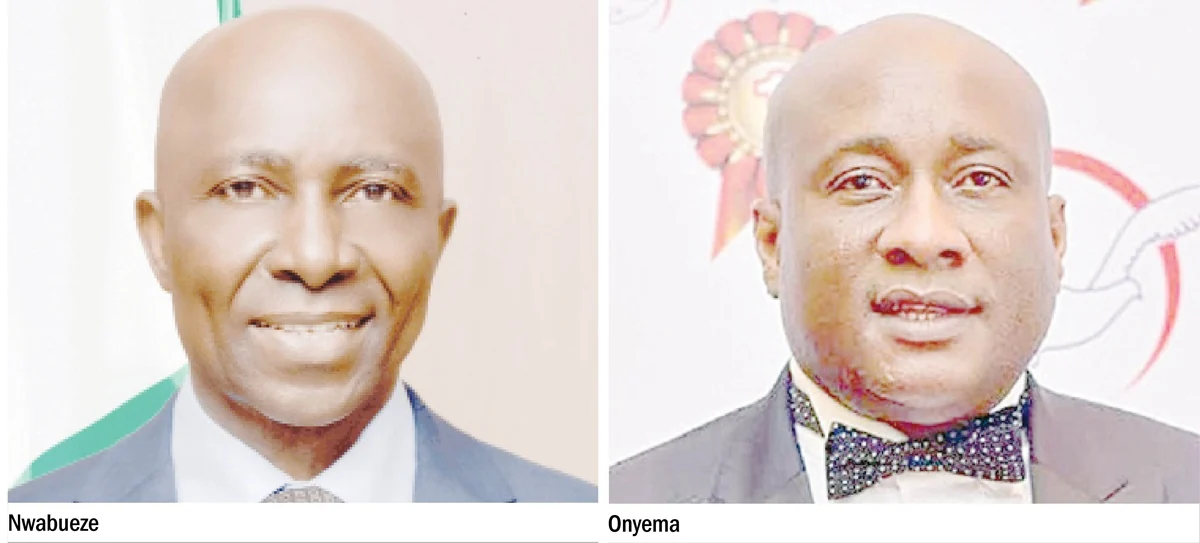
Perhaps the most dramatic intervention came from Dr Allen Onyema, Vice President of the Airline Operators of Nigeria and Chairman of Air Peace Limited, who warned that some indigenous airlines might not survive another six months without urgent intervention.
Citing the International Air Transport Association’s assessment of Nigeria as the world’s most difficult environment for establishing an airline business, Onyema described an industry struggling under the weight of multiple taxes, high operating costs and inconsistent policies.
According to him, the 7.5 per cent Value Added Tax (VAT) on airline tickets, combined with a five per cent Nigerian Civil Aviation Authority charge, creates a 12.5 per cent burden on passengers and operators. Aviation fuel prices had risen to between N3,300 and N3,500 per litre, while borrowing costs ranged from 29 to 33 per cent. Airlines also contend with more than 54 other charges.
He recalled that more than 80 airlines had collapsed in Nigeria over the years, warning that existing operators were exposed to similar pressures.
His intervention illustrated why the Tax Ombud matters. When taxation, regulatory charges and administrative practices threaten the survival of productive enterprises, an effective independent complaints-resolution mechanism becomes an important part of the country’s economic infrastructure.
The question is no longer simply whether Nigeria needs more tax revenue, but whether it can build a system that raises revenue without undermining the businesses expected to generate it.
New institution in a changing tax landscape
Nigeria’s tax reforms, which commenced on January 1, 2026, represent one of the most comprehensive attempts in recent years to restructure revenue administration, simplify compliance and strengthen the country’s fiscal capacity.
The establishment of the Office of the Tax Ombud under the Joint Revenue Board of Nigeria (Establishment) Act 2025 is an important institutional component of this reform.
In his opening address at the Lagos engagement, Dr John C. Nwabueze, the Tax Ombud and Chief Executive of the office, described its mission as creating a fairer, more transparent and responsive tax administration system.
He said the office was established to strengthen accountability, protect taxpayers’ rights and promote fairness in dealings between taxpayers and revenue authorities.
Under Part VI, particularly Section 41 of the establishing Act, the office is empowered to receive, review and resolve complaints relating to taxes, levies, regulatory fees and charges, customs duties and excise matters.
Its intervention covers operational, procedural and administrative grievances arising from interactions with tax and revenue authorities.
Importantly, its services are free. This provision could prove particularly significant for small businesses and individual taxpayers who may lack the financial resources to engage expensive tax consultants or pursue lengthy disputes over administrative decisions.
The Ombud explained that complaints would be handled through mediation, conciliation and other informal, fair and cost-effective processes.
However, the office does not determine tax liabilities, issue tax assessments or replace established procedures for challenging substantive tax assessments through the courts.
That distinction is important. The Tax Ombud is not another revenue authority or an alternative tax tribunal. Its primary responsibility is to ensure that revenue authorities administer existing laws fairly and that taxpayers receive appropriate treatment.
Nwabueze urged taxpayers and business owners to submit formal complaints whenever they encounter administrative or procedural difficulties, assuring them that the office would engage the relevant authorities to resolve legitimate grievances.
He also disclosed plans to extend stakeholder engagements across the country, having commenced the initiative in Abuja before moving to Lagos.
The cost of tax uncertainty to businesses
One of the strongest arguments for an effective Tax Ombud emerged from concerns about conflicting interpretations of Nigeria’s new tax legislation.
A representative of British American Tobacco (BAT) explained that the company encountered uncertainty over the appropriate legislation for preparing its 2026 year-of-assessment tax returns, relating to profits earned in 2025.
According to the representative, the Nigeria Revenue Service initially directed companies to prepare their returns under the new Nigerian Tax Act.
However, stakeholders raised concerns about retrospective application. On June 18, the Ministry of Finance issued transition guidelines indicating that the 2026 year-of-assessment returns should be governed by the repealed Companies Income Tax Act.
BAT said it relied on the ministry’s guidance in good faith, prepared and filed its returns accordingly, but subsequently received correspondence from the revenue service insisting on the new legislation and alleging non-compliance.
The company was concerned about additional tax demands arising from the apparent inconsistency.
The issue raises a fundamental question about regulatory certainty: how can businesses comply voluntarily when different government institutions appear to provide conflicting instructions?
For investors, tax uncertainty carries a measurable economic cost. It complicates financial planning, increases compliance expenditure, creates contingent liabilities and can influence decisions on expansion, employment and capital allocation.
Nwabueze advised the company to submit a comprehensive written complaint, promising that the office would engage the relevant authorities.
He maintained that such administrative disagreements fell squarely within the Ombud’s mandate.
The significance of this intervention extends beyond BAT. A tax system cannot command confidence if businesses face uncertainty about which official interpretation to follow, particularly when compliance decisions can subsequently attract penalties.
Small businesses and the burden of uniform taxation
The concerns of smaller enterprises were equally revealing.
Gertrude Akime, Chairman of the Nigeria Association of Small Scale Industrialists, Lagos Chapter, complained that small producers of orange juice, apple juice and locally made drinks such as zobo were subjected to a N10-per-bottle sugar-sweetened beverages levy, similar to that imposed on major multinational beverage companies.
She also alleged that customs officials demanded as much as N2 million from some small producers whose entire business capital might be below that amount.
For emerging manufacturers operating with limited capital, such demands could discourage formalisation, restrict production and undermine their ability to compete.
The concern touches on a critical principle of effective taxation: the need to balance revenue collection with the economic capacity and circumstances of taxpayers.
While the Ombud cannot unilaterally exempt businesses from statutory obligations, it can examine whether the relevant authorities are applying the law correctly, consistently and in accordance with due process.
This is particularly important in an economy where micro, small and medium-sized enterprises account for a substantial proportion of businesses and employment.
Nigeria’s tax administration must therefore avoid creating conditions in which small businesses are pushed out of the formal economy by compliance costs and administrative pressure.
Avoiding business risk in tax administration
Other participants described problems associated with tax audits, multiple regulatory charges and the activities of private revenue consultants.
One business representative alleged that tax officials sometimes conducted audits years after companies had paid taxes based on their financial statements, only to raise additional assessments that exceeded the businesses’ total assets.
Some companies, the participant claimed, were forced to consider selling assets or shutting down operations to meet such demands.
There were also complaints that auditors sometimes failed to recognise that only a portion of a transaction represented actual income, resulting in inflated assessments.
In the hospitality and tourism industry, operators raised concerns about overlapping federal, state and local government charges, including requirements that appeared to cover similar services.
The use of private consultants to collect revenue also attracted criticism, with participants alleging that some operated primarily to maximise collections without sufficient regard for fairness.
These complaints highlight a structural weakness in tax administration: the possibility that revenue-generating institutions and their agents may prioritise collection targets over service delivery, procedural fairness and economic sustainability.
Thompson Akpabio of the Nigeria Employers’ Consultative Association (NECA) challenged the Ombud to demonstrate that the institution possessed sufficient authority to ensure compliance with its recommendations.
He also proposed harmonisation of conflicting federal, state and local government tax provisions, continuous training for revenue officials and the deployment of desk officers within collecting agencies.
In response, Nwabueze said the establishing Act contained mechanisms for addressing cases in which recommendations were rejected. Relevant authorities would be required to provide reasons for their positions.
He disclosed that the office was establishing desk officers in approximately 57 agencies, including the 36 state internal revenue services, the Federal Capital Territory revenue service and other revenue-generating institutions.
The arrangement is intended to improve communication, facilitate complaints resolution and reduce delays.
If properly implemented, this network could become one of the most practical instruments for reducing friction between taxpayers and revenue authorities.
Independence: Foundation of public confidence
For the Tax Ombud to command public confidence, however, its independence must be beyond institutional doubt.
Taiwo Olayinka, Second Deputy President of the Chartered Institute of Taxation of Nigeria (CITN), raised questions about the safeguards protecting the office from external influence, particularly given the ministerial role in recommending its Chief Executive.
The CITN scribe also sought clarification on statutory reporting obligations, including quarterly publications, and the office’s capacity to inspect the technology and processes used by revenue authorities.
These questions go to the heart of the institution’s credibility.
Although Nwabueze maintained that the law guarantees the office’s independence, independence must be demonstrated through transparent procedures, consistent decisions, impartial investigations and the willingness to hold revenue authorities accountable.
The office must also communicate its activities regularly, publish information about complaints received and resolved, and demonstrate that its interventions produce practical improvements.
An Ombud that merely receives complaints without securing meaningful administrative corrections risks becoming another bureaucratic layer.
Its credibility will ultimately depend on the quality, speed and fairness of its interventions.
Why the Tax Ombud matters to Nigeria’s revenue ambitions
Nigeria’s drive to expand tax revenue is understandable. The government needs sustainable domestic revenue to finance infrastructure, education, healthcare, security and other public services while reducing dependence on borrowing and volatile oil receipts.
But revenue mobilisation cannot be divorced from economic growth.
Businesses create employment, invest in productive capacity, generate exports and provide the taxable income on which sustainable public revenue depends.
When excessive or poorly administered taxes weaken these businesses, the government risks damaging the very economic base it seeks to tax.
Olushola Obadimu of the Nigerian Association of Chambers of Commerce, Industry, Mines and Agriculture (NACCIMA) argued that the challenge facing businesses extends beyond taxation to include inadequate infrastructure, high energy costs and multiple financial demands.
He cautioned against concentrating revenue collection on existing taxpayers rather than widening the tax base through policies that encourage new businesses and investments.
Representatives of professional associations, including the Institute of Chartered Accountants of Nigeria, the Association of National Accountants of Nigeria and the Chartered Institute of Taxation of Nigeria, alongside the Nigerian Export Promotion Council and other stakeholders, expressed support for the new institution.
Their interventions reflected a common position: a tax system should be judged not only by the revenue it generates but also by how fairly it treats those required to pay.
For exporters, predictability is essential to competitiveness. For petroleum marketers, trapped input VAT can constrain working capital. For manufacturers, unclear incentives and multiple charges can undermine investment decisions.
The Tax Ombud therefore has an opportunity to address administrative weaknesses that affect several sectors simultaneously.
From complaint resolution to institutional reform
The most important challenge before Nwabueze is to transform the office from a relatively unknown institution into a credible national mechanism for protecting taxpayers’ rights.
First, public awareness must improve. Many taxpayers may still be unaware that they can approach the office without paying a fee.
Second, complaints must be handled within statutory timelines. Nwabueze indicated that the office would ordinarily seek resolution within 14 days, with a possible additional seven days. Meeting these timelines will be essential to demonstrating efficiency.
Third, the office must establish a transparent reporting culture, providing regular information on complaints received, categories of grievances, resolution rates and cases in which revenue authorities fail to implement recommendations.
Fourth, the proposed desk-officer network must become operational and accessible, particularly to businesses outside Lagos and Abuja.
Finally, the office must use recurring complaints to identify systemic weaknesses and recommend administrative improvements to the relevant authorities and the Joint Revenue Board.
The task is not to weaken revenue collection or provide taxpayers with an escape route from legitimate obligations. It is to ensure that the law is administered consistently, that taxpayers are treated with dignity and that government agencies remain accountable for their actions.
The ultimate test is trust
At the Lagos meeting, Onyema expressed confidence that President Bola Tinubu could address the aviation industry’s challenges if properly briefed. He recalled the removal of the four per cent Free on Board charge and an earlier seven per cent surcharge following industry representations as evidence that engagement could produce policy changes.
That experience reinforces the potential value of an institution capable of transmitting legitimate complaints from businesses to the appropriate authorities.
But the Tax Ombud must go beyond listening sessions. It must demonstrate that complaints lead to action, that administrative excesses are corrected and that taxpayers can obtain redress without unnecessary delays or financial costs.
Nigeria’s tax reforms have created a new framework for revenue administration. Their sustainability will depend on the strength of the institutions responsible for implementing them.
The Office of the Tax Ombud occupies a critical position in this architecture. It can help prevent disputes from escalating, improve compliance, reduce unnecessary business costs and strengthen the relationship between government and taxpayers.
Ultimately, the measure of its success will not be the number of stakeholder meetings organised or complaints received, but the number of legitimate grievances resolved, administrative practices improved and businesses protected from avoidable regulatory uncertainty.
As Nwabueze put it, the office’s guiding philosophy is “bridging differences, building trust.”
For Nigeria, that trust could become one of the most valuable assets of its new tax administration system. Without it, even the most ambitious revenue reforms may struggle to secure voluntary compliance. With it, taxation can become not merely an instrument of revenue extraction, but a foundation for investment, enterprise development and sustainable economic growth.
WATCH TOP VIDEOS FROM NIGERIAN TRIBUNE TV