


By Emma Ujah, Abuja Bureau Chief
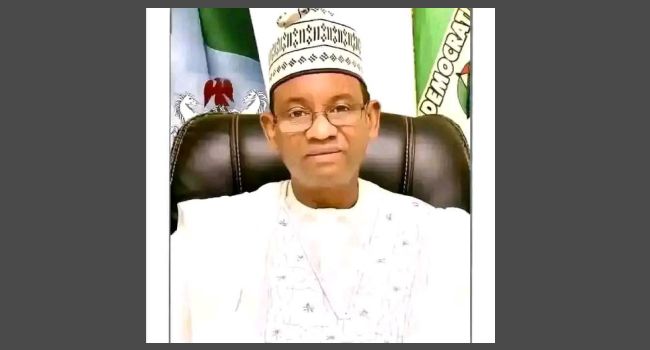
The President, Nigerian Economic Society (NES), Dr. Baba Musa, has blamed the collapse of long-term economic planning for the failure of the Ajaokuta Steel Company to become operational more than four decades after its establishment.
Musa, who spoke at the National Growth & Development Forum (NGDF) 2026 in Abuja, said Nigeria lost the link between economic planning and execution, resulting in the abandonment or underperformance of strategic national projects.
“History demands candour. Somewhere along the way, we lost vital links between plan and performance. We built, but did not always maintain,” he said.
According to him, the oil windfall of the 1970s diverted the country from agriculture and non-oil exports which had previously sustained the economy.
“The oil windfall of the 1970s drew us away from the agriculture and non-oil exports that had sustained us. Strategic projects such as the Ajaokuta Steel Complex, begun with great promise, have yet to fulfil it four decades on.
“And when formal planning gave way in the mid-1980s, long-term strategy too often yielded to visions that changed with administrations,” Musa said.
He said Nigeria must learn from its past policy failures to avoid repeating mistakes that have undermined economic development.
“The Nigeria we want must be built upon the Nigeria we have, and the Nigeria we have,” he added.
The NES president also expressed concern that economic reforms had yet to translate into shared prosperity, noting that about 63 per cent of Nigerians, estimated at 140 million people, lived below the poverty line in 2025, according to the World Bank.
“Macroeconomic stability is necessary, but it is not yet shared prosperity. A stable exchange rate is not yet a full dinner table. Stability is the foundation; it is not the building,” he said.
Musa called for an economy that generates jobs, supports the poor, boosts domestic production, invests in human capital and promotes disciplined public finance and credible institutions.
Similarly, President, Capital Market Academics of Nigeria, Prof. Uche Uwaleke, said economic reforms must be measured by their impact on citizens’ welfare, job creation, purchasing power and poverty reduction.