

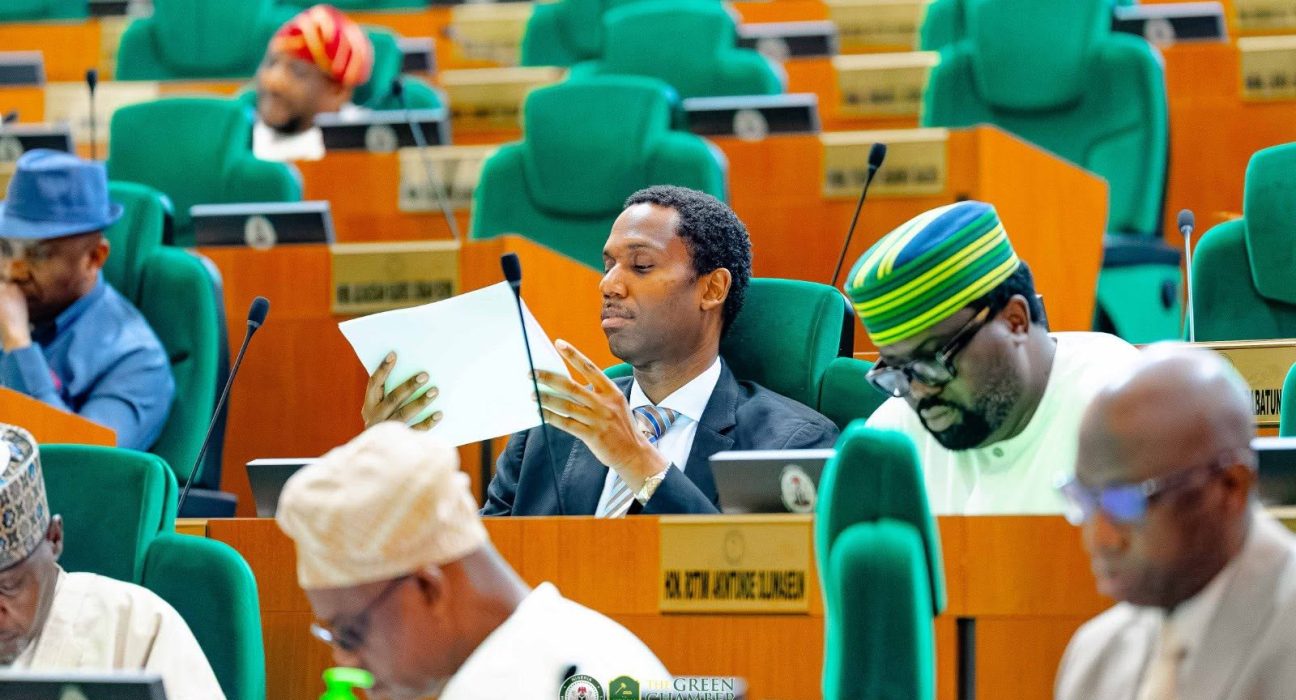
The House of Representatives on Wednesday urged President Bola Tinubu to consider invoking emergency powers in Delta State if recurring political violence escalates into an actual or imminent breakdown of public order.
In neighbouring Edo State, the police confirmed an attack on supporters of the Nigeria Democratic Congress (NDC) during campaign activities associated with the visit of its presidential candidate, Peter Obi.
The developments came as the ruling All Progressives Congress (APC) rejected the NDC’s allegations of coordinated attacks on opposition candidates and supporters.
Former Vice President Atiku Abubakar demanded an explanation for a reported decline in oil revenue. At the same time, Oyo State Governor Seyi Makinde’s campaign questioned a proposed reduction in federal expenditure without a corresponding cut in borrowing.
In Maiduguri, Borno State, Mr Tinubu renewed his pledge to rescue abducted schoolchildren. At the same time, the Independent National Electoral Commission (INEC) announced the establishment of an artificial intelligence division to combat election misinformation.
Reps seek action over Delta violence as police confirm Edo attack
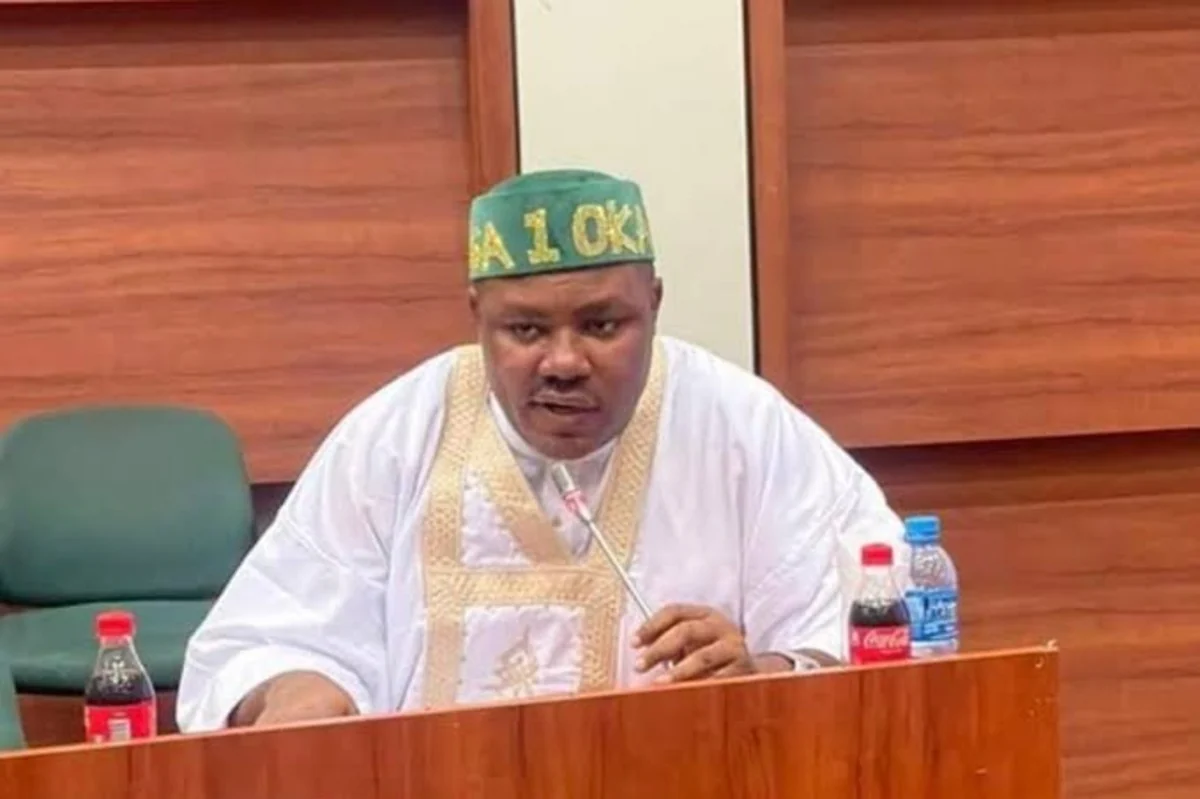
The House of Representatives’ resolution followed a motion of urgent public importance sponsored by Benedict Etanabene, representing Ughelli North/Ughelli South/Udu Federal Constituency.

The lawmakers called for investigations into political attacks in Delta, prosecution of perpetrators and their sponsors, and assistance to victims and bereaved families.
They urged President Tinubu to consider exercising his powers under Section 305 of the Constitution if the situation meets the constitutional threshold for emergency intervention. The resolution does not constitute a declaration of a state of emergency.
The House directed four of its committees—Police Affairs, National Security and Intelligence, Electoral Matters, and Political Parties Matters—to consult security agencies and report back within two weeks.
It also asked the Inspector-General of Police to convene a meeting of Delta governorship candidates on compliance with campaign laws.
The intervention followed Monday’s attack on a campaign gathering involving former Deputy Senate President Ovie Omo-Agege of the NDC in Uduere community, Ughelli North Local Government Area.
As PREMIUM TIMES reported in Tuesday’s Politics Watch, preliminary police findings indicated six deaths, prompting the Inspector-General of Police, Olatunji Disu, to order an investigation, including into the conduct of officers deployed to the venue.
The NDC has identified three of those killed: former state lawmaker Moses Anaughe, human rights activist Efemena Umukoro and party chieftain Nyoren Okoro.
A hospitalised survivor told Mr Obi and his running mate, Rabiu Kwankwaso, that he had received threats after participating in an earlier NDC procession and that his business had been targeted.
Mr Omo-Agege and Ughelli North council chairman Jaro Egbo have given conflicting accounts of who was responsible. Mr Egbo accused the former senator’s supporters of starting the confrontation. The police investigation is ongoing.
In a statement on the Edo incident, police spokesperson Eno Ikoedem, an assistant superintendent of police, identified Aimionkhale Micheal as the person injured along Airport Road in Benin City.
The spokesperson said Mr Micheal was receiving treatment in hospital and that the Commissioner of Police, Patrick Daaor, had ordered an investigation and additional security deployments.
NDC National Publicity Secretary Osa Director alleged that several supporters were injured and campaign vehicles damaged. The police reported one injury and did not establish the attackers’ political affiliations or sponsors.
At a press conference in Abuja on Wednesday, NDC National Chairman Cleopas Zuwoghe accused the APC of coordinating attacks intended to intimidate opposition candidates and supporters. He cited incidents in seven states, including Delta, Kano, Edo and Lagos, and appealed for international scrutiny.
The APC rejected the allegations in a statement by Abimbola Tooki, special adviser on media and information strategy to its National Chairman, Nentawe Yilwatda.
Mr Tooki said the party opposed political intimidation, called for investigations and rejected the appeal for foreign intervention. The APC also alleged that its supporters and campaign structures had suffered attacks.
In Kano, the NDC presidential campaign council alleged an attack on Maryam Golden, a social media personality associated with the Kwankwasiyya movement, on Tuesday. The alleged political motive remains unverified.
Mr Obi separately defended Kwankwasiyya supporters’ practice of carrying sticks, saying it was not intended to harm others.
Wednesday’s developments followed Tuesday’s security meeting at which 12 political parties signed a peace agreement. The NDC boycotted the meeting, alleging that security agencies had failed to protect its members.
Atiku questions oil revenue decline as Makinde challenges budget revision
Atiku on Wednesday demanded an explanation for the fall in government oil receipts during the first half of 2026.
In a statement by Phrank Shaibu, director of strategic communication for the African Democratic Congress (ADC) Presidential Campaign Council, the former vice president cited Budget Office figures showing collections of ₦7.88 trillion between January and June, compared with about ₦9.32 trillion a year earlier.
The figures are consistent with PUNCH’s analysis of the Budget Office’s second-quarter and half-year implementation report, released on 7 November. The newspaper’s analysis appeared on Tuesday, a day before Atiku issued his statement.
Revenue fell by about 15.5 per cent year-on-year and amounted to roughly 42 per cent of the ₦18.65 trillion half-year target.
The ₦1.44 trillion decline and the roughly ₦10.8 trillion shortfall against the budget target measure different aspects of revenue performance. Neither figure, on its own, establishes that public funds were stolen or diverted.
Atiku acknowledged production constraints, weak oil sales receipts, and deductions as factors identified in the report. He demanded greater transparency in production, sales, deductions and remittances.
Although corroborated by PUNCH’s reporting, the underlying Budget Office fiscal tables were not independently examined for this roundup.
The Makinde-Daura Presidential Campaign Organisation questioned the proposed reduction in federal expenditure without a decrease in borrowing or the fiscal deficit.
Mr Tinubu on Tuesday proposed reducing the 2026 budget from ₦68.323 trillion to ₦65.176 trillion, a reduction of ₦3.147 trillion, or about 4.6 per cent.
Projected revenue stands at ₦33.720 trillion, while the reported deficit remains ₦31.457 trillion. Planned borrowing remains ₦29.218 trillion, comprising ₦18.428 trillion in domestic financing and ₦10.790 trillion in external financing.
If the deficit is calculated on the same accounting basis, retaining it while reducing expenditure implies a downward revision of projected revenue.
The campaign organisation, representing Mr Makinde on the platform of the Allied Peoples Movement (APM), also alleged project duplication and inadequate capital releases in a statement by its Director of Strategic Communications, Richard Ihediwa.
Those allegations require examination against appropriation schedules and implementation records.
In his earlier communication to the National Assembly, Mr Tinubu attributed the adjustments to existing obligations, including debt servicing, capital commitments and expenditure incurred by the Nigerian National Petroleum Company Limited (NNPCL) on behalf of the federation.
That explanation preceded Wednesday’s criticism. Direct responses from the government and the NNPCL to the latest fiscal allegations were not available for this roundup.
Meanwhile, the Senate approved an earlier external borrowing request that Mr Tinubu had withdrawn, as well as his revised request for about $7.7 billion.
As PREMIUM TIMES reported on Tuesday, senators who contributed to the debate did not address the earlier withdrawal. The approvals do not establish that the facilities have been drawn down or constitute separate additional debts.
Former Secretary to the Government of the Federation Babachir Lawal criticised Mr Abubakar’s fuel subsidy proposal, citing abuses associated with the previous subsidy regime.
At his Kogi rally on Tuesday, Atiku proposed a targeted subsidy on domestically refined fuel but did not specify its rate or expected fiscal cost.
Mr Lawal resigned from the ADC in June after Mr Abubakar won the party’s presidential primary. PREMIUM TIMES’ earlier attempt to reach Mr Abubakar’s spokesperson, Paul Ibe, for a response to Mr Lawal’s allegations was unsuccessful.
Tinubu renews Borno rescue pledge as Wike seeks wider campaign role
Mr Tinubu pledged to intensify efforts to rescue abducted schoolchildren in Askira Uba Local Government Area during an APC presidential campaign rallyly in Maiduguri.
According to his media aide, Bayo Onanuga, the president directed security agencies to intensify operations against insurgents and called on insurgents to surrender.
TheCable reported that 42 pupils were abducted from a school in Mussa on 15 May and another 36 students from Government Day Secondary School, Lassa, on 29 June.
A PUNCH report on Saturday indicated that all 78 children remained in captivity. Wednesday’s presidential assurance provided neither a rescue timetable nor an updated figure for those still being held.
Speaking at a Rainbow Coalition town hall meeting in Gokana Local Government Area, Rivers State, Minister of the Federal Capital Territory Nyesom Wike asked Mr Tinubu and APC presidential campaign director-general Abdulaziz Yari to extend his campaign responsibilities to Imo and Kwara states.
He cited political difficulties in both states and maintained that mobilisation for Mr Tinubu was complete in Rivers and the FCT.
There was no reported approval of the request by Wednesday evening.
Court battles, rally postponement and campaign policing
The Court of Appeal in Abuja on Wednesday reserved judgment in a dispute over former communications minister Isa Pantami’s nomination as the Peoples Democratic Party (PDP) governorship candidate in Gombe State.
The appellant, Usman Garry, is challenging the portion of a 24 September Federal High Court judgment permitting Mr Pantami to participate in a fresh primary, held on 29 September, after nullifying the party’s 26 May primary.
Mr Garry argued that Mr Pantami joined the PDP after the statutory deadline for submitting its membership register to INEC, contrary to Section 77 of the Electoral Act 2026.
The case follows Tuesday’s Federal High Court judgment nullifying Mr Omo-Agege’s NDC senatorial nomination, another dispute concerning party membership requirements. Mr Omo-Agege has announced his intention to appeal.
Separately, former Kaduna State Governor Nasir El-Rufai denied intercepting telephone conversations involving National Security Adviser Nuhu Ribadu.
Testifying before Justice Joyce Abdulmalik, Mr El-Rufai described his earlier televised remarks as political rhetoric. His trial continues following the dismissal of his no-case submission.
The ADC postponed its Jigawa presidential campaign rally, originally scheduled for Friday, 27 November.
Mati Ali, a spokesperson for the party’s governorship campaign in the state, cited the need for further mobilisation and logistical preparations, without attributing the postponement to security threats or government restrictions. The party gave no replacement date.
Atiku continues campaigning while the ADC challenges the 5 November Federal High Court judgment that nullified his presidential nomination and removed the party’s David Mark-led leadership.
The judgement followed a suit brought by Nafiu Bala Gombe. The party has applied for a stay of execution, but no stay order had been confirmed by Wednesday evening.
In Kebbi State, the police announced three arrests and the filing of charges following an ADC-linked gathering in Birnin Kebbi Local Government Area.
Police spokesperson Bashir Usman alleged that participants carried offensive weapons, made inflammatory remarks and breached an agreement requiring political parties to give at least 48 hours’ notice of activities.
The police said the wife of Abubakar Malami, who is campaigning for governor under the ADC, organised the gathering, reportedly presented as relief distribution.
The command provided no details of the event date, suspects’ identities, specific charges or court handling the case, nor did it identify any physical assault or injury arising from the gathering.
Section 95 of the Electoral Act 2026 requires police protection for lawful political gatherings but does not itself prescribe the 48-hour notification period cited by the Kebbi command.
An ADC response to the allegations was unavailable for this roundup.
INEC sets up AI division as chairman says he receives daily threats
INEC has established an artificial intelligence division within its Information and Communication Technology Department to address fabricated audio, manipulated videos and other forms of election misinformation.
INEC Chairman Joash Amupitan announced the initiative through his Chief Press Secretary, Adedayo Oketola, at the Nigeria Election Risks and Readiness Summit organised by the Centre for Journalism Innovation and Development in Abuja.
The division is distinct from INEC’s proposed use of artificial intelligence and intelligent document processing in handling polling-unit results, for which Mr Abubakar has demanded an independent audit.
The commission plans to recruit about 1.41 million ad hoc personnel, with roughly 700,000 expected to be deployed in each election phase. It extended the registration period for prospective personnel from two weeks to two and a half weeks.
INEC said it was procuring about 57,000 new Bimodal Voter Accreditation System (BVAS) devices and had reduced the number of voters assigned to each device from 1,250 to 850, a 32 per cent reduction intended to ease accreditation.
At a meeting with resident electoral commissioners on Wednesday, Mr Amupitan said he receives threats daily.
His remarks come ahead of the nationwide mock accreditation exercise scheduled for Saturday, 28 November, whose arrangements PREMIUM TIMES detailed in Tuesday’s Politics Watch.
The presidential and National Assembly elections are scheduled for 16 January 2027 and the governorship and State House of Assembly elections for 6 February.
While Saturday’s exercise will test electoral technology, the effectiveness of the new misinformation division and the protection of electoral personnel will need separate assessment.