

The Inter-Parliamentary Union (IPU) has called on the Economic Community of West African (ECOWAS) Parliament to strengthen regional parliamentary cooperation, legislative oversight and accountability to combat child labour and human trafficking across West Africa.
The IPU said national and regional parliaments must move beyond adopting resolutions and policy declarations to ensure that commitments to protect children translate into adequate budgetary provisions, effective implementation and measurable results.
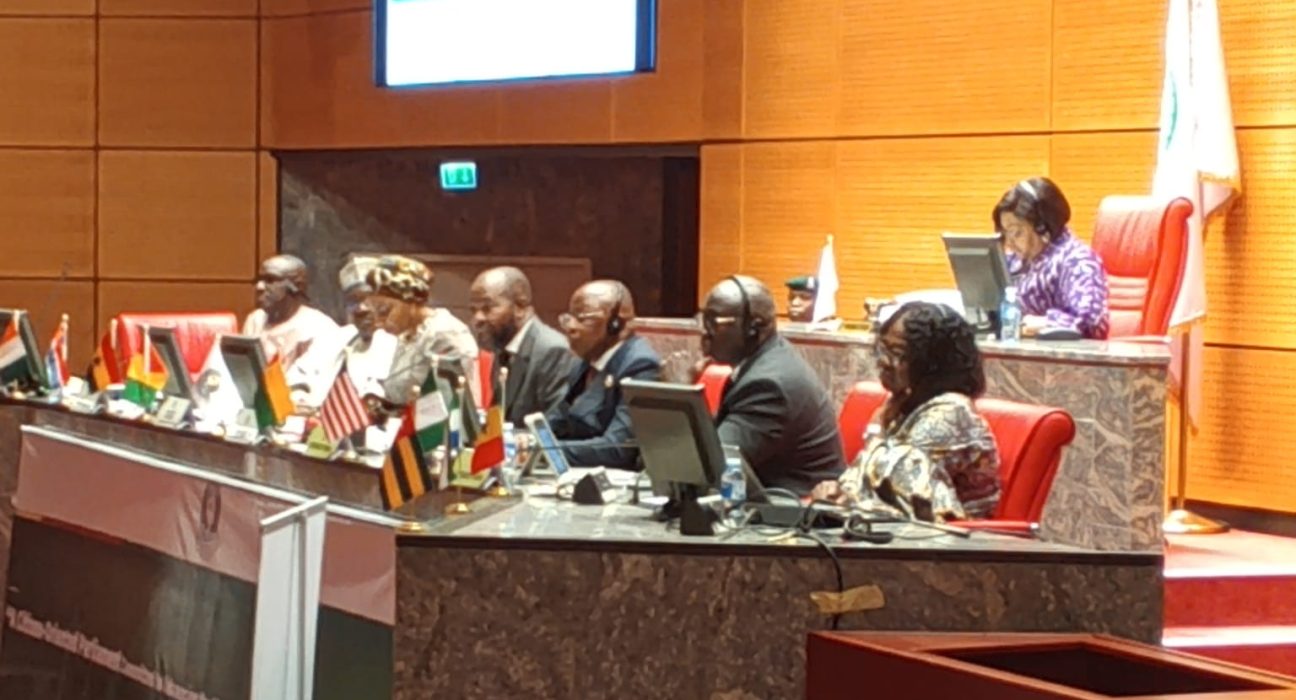
Akiyo Afouda, Senior Programme Officer, who represented the Secretary-General of the IPU, made the call at the ongoing 2026 Second Ordinary Session of the ECOWAS Parliament, on combating child labour and human trafficking.
Afouda said the scale of child labour across the world, particularly in sub-Saharan Africa, required stronger political commitment and coordinated regional action to protect vulnerable children from exploitation.
Citing estimates published in 2025 by the International Labour Organisation (ILO) and the United Nations Children’s Fund (UNICEF), he said approximately 138 million children were still engaged in child labour globally, including 46.6 million in sub-Saharan Africa.
He described the figures as a troubling indication that millions of children continued to be deprived of education, exposed to exploitation and forced into dangerous forms of employment despite existing international commitments and interventions.
According to him, child labour and human trafficking are not only violations of children’s fundamental human rights but also significant obstacles to economic development, social cohesion and the development of human capital in the region.
He said the practices perpetuated poverty, widened inequality and undermined the prospects of building prosperous and sustainable societies.
Afouda identified poverty, population displacement, insecurity, economic disparities and weak social protection systems as some of the factors creating conditions for child exploitation across West Africa.
He also highlighted the cross-border nature of trafficking and exploitation, noting that the challenges required coordinated responses among countries rather than isolated national interventions.
He said the ECOWAS Parliament had an important political and strategic responsibility to mobilise national legislatures, facilitate dialogue and coordinate regional efforts towards eliminating child labour.
The regional parliament, he added, could promote coherent public policies, encourage increased investment in child protection and strengthen cooperation among member states.
However, he stressed that parliamentary responsibilities should extend beyond passing legislation and issuing declarations to ensuring that governments implement their commitments through adequate funding and effective monitoring.
“The true measure of your commitment does not lie in the number of resolutions adopted, but in the number of children effectively protected,” he said.
Afouda said the workshop was part of an ongoing collaboration between the IPU and the ECOWAS Parliament, recalling a previous meeting held in May 2023 involving the IPU Secretary-General, Martin Chungong, and Nobel Peace Prize laureate Kailash Satyarthi.
He said the meeting produced recommendations, including the need for regular monitoring of national initiatives and stronger regional parliamentary coordination.
He urged parliamentarians at the current workshop to assess the progress made since the 2023 engagement, identify measures adopted by national parliaments and examine the obstacles preventing effective implementation.
According to him, the focus should now shift from awareness creation to coordinated action and the delivery of measurable results.
Afouda said one of the major objectives of the workshop was to establish the foundations for a regional parliamentary strategy against child labour, anchored on four key priorities.
These include sustained political commitment, structured regional parliamentary cooperation, stronger legislative oversight and effective monitoring and evaluation mechanisms.
He said child protection must remain a priority for national and regional parliaments beyond changes in political leadership and legislative administrations.
Read also: From ‘do-or-die’ to ‘rig-and-die’: Sociolinguistic calculus of Nigeria’s electoral violence ecology
On regional cooperation, he urged lawmakers to share experiences and successful interventions, harmonise approaches and strengthen solidarity among member states.
He further called for more rigorous parliamentary oversight of government policies and budgetary allocations, particularly to ensure that interventions reached vulnerable communities.
He said the proposed regional strategy should also establish clear priorities, define institutional responsibilities and develop measurable indicators to track progress.
Afouda stressed the importance of involving relevant government institutions, civil society organisations, social partners and local communities in the collective response.
He said the participation of these stakeholders would be essential to translating regional commitments into practical improvements in the lives of children.
The IPU representative reaffirmed the organisation’s commitment to supporting the ECOWAS Parliament in strengthening its capacity to protect human rights, consolidate democracy and promote inclusive development.
He expressed hope that the workshop would produce concrete recommendations to reinforce the regional parliament’s leadership in the campaign against child labour and human trafficking.
Afouda said protecting children was not merely about defending their rights but also about preserving the human capital of West African countries, strengthening democratic institutions and securing the future of the region.
He urged parliamentarians to ensure that every child had the opportunity to grow up safely, access education and remain protected from all forms of exploitation.