

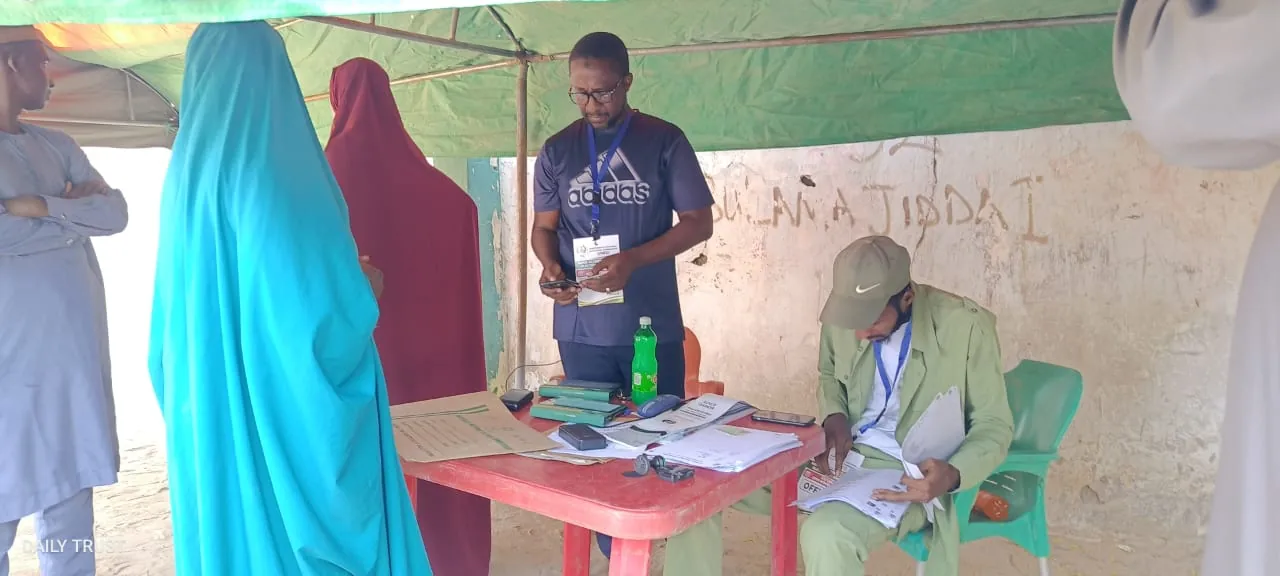
A Civil Society Organisation, Yiaga Africa, has expressed concerns over low voter turnout recorded in some polling units during the Independent National Electoral Commission (INEC) mock accreditation and results upload exercise conducted on Saturday.
According to INEC, the exercise was to assess the functionality of its Bimodal Voter Accreditation System (BVAS) and other procedures, including voter accreditation and uploading of simulated results electronically.
However, the exercise recorded low voter participation in some polling units.
Speaking during the organisation’s post-exercise briefing on its observation of the mock election on Saturday, Yiaga Africa Executive Director, Samson Itodo, attributed the low voter turnout it observed across some polling units to inadequate public sensitisation and declining public trust in the electoral process.
While acknowledging that the BVAS functioned optimally in most observed polling units, the group raised questions on the performance of the technology under conditions of high voter traffic.
“Yiaga Africa observed how low voter turnout, potentially attributed to inadequate public sensitisation and the declining public trust in the electoral process, may have accounted for this low levels of turnout.
“On the 19th of November, Yiaga Africa urged INEC to publish the operational framework and the list of designated polling units to facilitate citizens’ participation.”
“The commission published the list 48 hours after the statement was released, and this was just in the week that the exercise was conducted.”
The organisation said the limited period for public mobilisation may have affected participation and reduced the exercise’s capacity to simulate actual election conditions
“This limited mobilisation period may have adversely affected public participation and also diminished the capacity of this mock exercise to simulate actual election conditions in most cases, because the BVAS is one of the key pillars of this mock exercise. BVAS functioned optimally in most observed polling units.
“In 68% of polling units, average voter processing time using the BVAS was between one to two minutes, and in 27%, the average voter processing time using the BVAS was between three to five minutes.
“However, in 4% of polling units, the average time to process a voter using the BVAS was between six to 10 minutes. So on the whole, the BVAS functioned optimally.
“Now, this raises questions about whether the exercise sufficiently tested the performance of the technology under conditions of high voter traffic, because if there were high voter traffic, it would have been easier to really draw conclusive assessment of the functionality of these devices in situations where there’s high voter traffic.”
UPDATE NEWS:
Nigerians can now invest ₦2.5 million on premium domains and profit about ₦17-₦25 million. All earnings paid in US Dollars. Rather than wonder,
click here to find out how it works.