

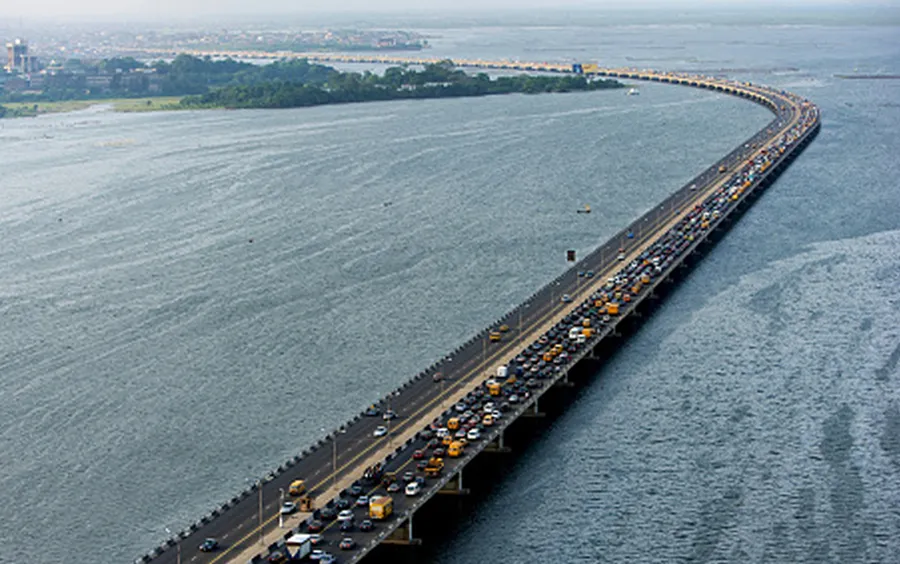
Lagos is among African coastal cities sinking faster than previously estimated, raising concerns about the city’s exposure to flooding and rising sea levels.
This was disclosed in a new study by scientists from Virginia Tech, which used satellite data to measure land movement across 20 African coastal cities, as reported by the BBC.
The study found that the ground beneath Lagos is sinking by an average of 5mm annually, potentially increasing the number of people and properties exposed to coastal flooding.
Lagos sinking 5mm annually, study finds
The research used radar imagery from the European Space Agency’s Sentinel-1 satellites to examine changes in land elevation across 20 African coastal cities.
Lagos was found to be sinking at an average rate of 5mm per year, while Alexandria in Egypt is experiencing subsidence of about 6mm annually. Both rates are higher than previously estimated in 2021 by the Intergovernmental Panel on Climate Change (IPCC).
The BBC report stated:
- “Scientists used radar imagery from the European Space Agency’s Sentinel-1 satellites to map how much the land beneath 20 African coastal cities had moved.
- “The study found that some cities – including Lagos in Nigeria and Alexandria in Egypt – were sinking much faster than previously estimated in 2021 by the UN’s climate body, the Intergovernmental Panel on Climate Change (IPCC).”
- It added, “The ground under Alexandria and Lagos was found to have sunk an average of 6mm and 5mm per year respectively.”
Lead author Oluwaseyi Dasho said land subsidence could significantly increase flood exposure over several decades, even though its effects are often difficult to notice in everyday life.
The study estimated that about 4 million people in Lagos could be exposed to extreme sea levels by the end of the century. Across the cities examined, 7 million people, one million buildings and assets worth $180 billion could face flood risks by 2050.
Land subsidence occurs when the ground gradually sinks, reducing an area’s elevation relative to the sea. The study also found significant subsidence in Luanda, Angola, while Durban, South Africa, remained relatively stable or experienced slight land elevation increases.
Human activities contribute to Lagos land subsidence
The researchers identified excessive groundwater extraction, land reclamation and construction on loose ground as possible contributors to land subsidence in Lagos.
- Reclaiming land from the ocean to create artificial islands and constructing buildings on loose ground were highlighted as possible factors behind the city’s sinking. Excessive groundwater extraction can also cause underground soil layers to compact, gradually lowering the land surface.
- Senior author Manoochehr Shirzaei, a professor of geosciences, said many human-related causes of subsidence are localised and can be addressed through targeted policies.
- He said reducing excessive groundwater extraction and providing alternative water sources could help limit some of the activities responsible.
The researchers recommended adaptation measures such as flood defences and relocating critical infrastructure to higher ground where necessary.
The Sentinel-1 satellites revisit the same areas every six to 12 days, allowing researchers to detect land movements as small as 1mm annually. Shirzaei said better monitoring could help governments identify areas where previous climate assessments underestimated subsidence risks and allocate resources more effectively.
The findings, published in Science Advances, could also help address monitoring gaps in other vulnerable regions, including Pacific island nations.
Lagos borehole dependence raises subsidence concerns
Playman explained that uncontrolled groundwater extraction can cause underground soil layers to compact, particularly in areas with soft, marshy terrain such as Lekki, potentially damaging buildings and infrastructure.
- He cited Venice, Tokyo and Shanghai as examples of cities where excessive groundwater extraction has contributed to land subsidence.
- He noted that some cities had responded by restricting borehole drilling and developing alternative water sources.
- The earlier report also highlighted Lagos’ inadequate piped water infrastructure, which has left many households and businesses dependent on private boreholes.
- Playman argued that improving the city’s water supply would require investment in modern distribution pipelines and comprehensive wastewater infrastructure, rather than relying solely on expanding water production capacity.
These concerns align with the latest study’s findings, which identify groundwater extraction, land reclamation and construction on loose ground as possible contributors to subsidence in Lagos.