

Follow THISDAYLIVE on GoogleAdd us as a preferred source to see more of our stories in Google
James Emejo writes that the new CBN and NNPC partnership to manage oil revenues to bolster macroeconomy couldn’t have come at a better time.
Only recently, the Central Bank of Nigeria (CBN), and Nigerian National Petroleum Company (NNPC) Limited, signed a Memorandum of Understanding (MoU) to improve Foreign Exchange (FX) inflows, enhance the management of petroleum proceeds and support macroeconomic stability.
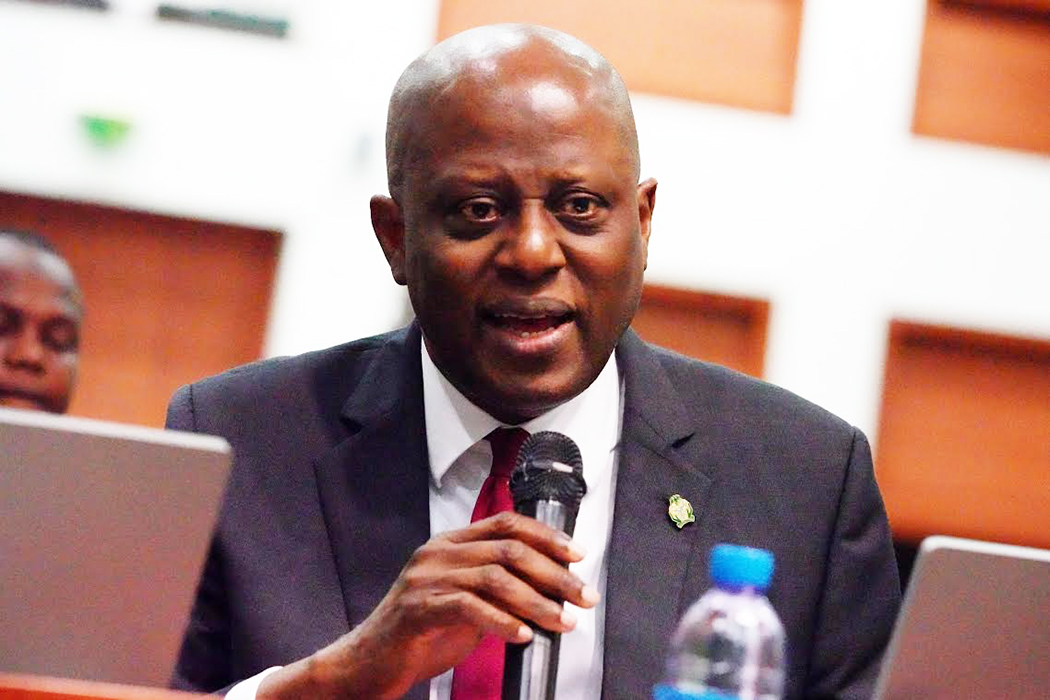
CBN Governor, Mr. Olayemi Cardoso; NNPC Group Chief Executive, Mr. Bayo Ojulari, endorsed the partnership at the apex bank’s headquarters in Abuja.
The partnership is particularly significant for the country:
For an economy that derives a substantial proportion of its foreign exchange earnings from crude oil, Nigeria’s recurring dollar shortages present an uncomfortable contradiction.
The country possesses enormous hydrocarbon resources, yet the relationship between petroleum wealth and monetary stability had remained far less productive than its resource endowment should permit.
The paradox goes beyond fluctuations in international oil prices or the familiar challenges of production disruptions. It touches on a deeper structural problem: the difficulty of converting the country’s most important export commodity into predictable foreign exchange supply, fiscal resources and lasting economic strength.
In effect, the country’s oil wealth had not consistently delivered the degree of monetary security expected of an economy so heavily dependent on petroleum exports.
However, Cardoso said the collaboration would strengthen the management of oil and gas earnings, improve the movement of export proceeds into designated government accounts and enhance liquidity in the foreign exchange market.
Under the leadership of CBN governor, the apex bank is seeking to establish a more disciplined connection between the country’s petroleum earnings and its broader monetary management, with implications for foreign exchange liquidity, external reserves, energy investment and the stability of the naira.
The MoU is not, by itself, a solution to the country’s FX difficulties. Neither does it guarantee an immediate increase in oil production or export receipts. Its importance, however, lies in the attempt to address an often-neglected dimension of the country’s economic crisis: the institutional and financial architecture through which oil-generated dollars enter and support the domestic economy.
According to the apex bank boss, the partnership represented an opportunity to take monetary reform beyond the conventional instruments of interest rates, exchange rate management and liquidity control, towards closer coordination with the sector responsible for generating a substantial portion of the country’s external earnings.
The cost of disconnecting oil wealth from monetary stability
Nigeria’s FX difficulties are often discussed in terms of demand pressures, speculative activities, import dependence and inadequate export diversification. These are important considerations, but they do not fully explain the country’s vulnerability.
The fundamental problem is also the inability to consistently maximise the monetary value of its dominant export sector.
An economy’s foreign exchange position is determined not simply by the value of its exports but by how much of the proceeds it retains, the timing of their repatriation, the obligations attached to those earnings and the efficiency with which they are managed.
The distinction is particularly important for the country because crude oil exports remain central to the country’s external payments capacity.
When petroleum production underperforms, export earnings decline. When proceeds are delayed or the financial arrangements surrounding them become inefficient, the impact extends beyond the petroleum industry to the foreign exchange market, government finances and the capacity to meet external obligations.
Avoid far-reaching Consequences
Inadequate foreign exchange supply places pressure on the naira, raises the domestic cost of imported inputs, increases production costs and complicates investment decisions. Businesses become more vulnerable to exchange rate uncertainty, while the government faces additional pressure in financing essential imports and servicing external obligations.
These effects can reinforce inflationary pressures and undermine economic planning.
This explains why the CBN’s relationship with NNPC is particularly consequential. The apex bank is not merely a regulator interacting with another commercial institution. It occupies a strategic position in the financial management of petroleum proceeds.
Cardoso explained that the CBN, as custodian of NNPC’s key operational foreign currency accounts, has a responsibility to facilitate the timely, secure and transparent settlement of oil and gas proceeds into the Federation Account and other designated government accounts.
The objective is to make the movement of petroleum earnings more predictable, improve the management of export proceeds and strengthen the availability of foreign exchange in the domestic economy. The governor’s emphasis on efficient account management, funds transfers and liquidity support points to an important economic reality: Nigeria cannot sustainably stabilise its foreign exchange market without improving the performance of the institutions and industries responsible for generating its external receipts.
In this respect, the partnership seeks to make the oil industry work more directly for the monetary system.
Why Cardoso needs the oil sector to deliver
Since assuming office, Cardoso has had to confront a monetary environment characterised by exchange rate distortions, weak confidence, foreign exchange market inefficiencies and pressure on external reserves.
The CBN’s response involved a broad recalibration of monetary and foreign exchange policies, including efforts to improve market transparency, strengthen regulatory compliance and rebuild confidence in the naira.
But monetary policy has an inherent limitation: it can influence the cost and availability of money, manage liquidity and shape expectations, but it cannot manufacture the foreign exchange needed to meet the country’s external obligations.
That supply must come from exports, investment, remittances and other external receipts.
For Nigeria, therefore, the performance of the petroleum sector is inseparable from the effectiveness of monetary management. The CBN-NNPC arrangement potentially addresses this interdependence by establishing a more structured relationship between the institution managing monetary stability and the national energy company with a central role in generating export earnings.
Cardoso disclosed that both institutions had maintained regular engagements, sometimes every fortnight, alongside other oil companies and regulators, to resolve operational challenges and discuss matters of mutual interest.
The formalisation of these engagements is intended to provide continuity, clearer responsibilities and a framework for coordinated action.
More significantly, the governor is seeking to deploy the CBN’s institutional influence and international relationships to improve the financing prospects of Nigeria’s energy industry.
He said the apex bank would use its convening capacity to attract international financial institutions capable of developing innovative financing structures for the country’s natural gas resources.
This is an important extension of the CBN’s role. Rather than approaching energy financing exclusively as a matter for NNPC and the fiscal authorities, Cardoso is positioning the apex bank as an institutional facilitator capable of connecting domestic energy opportunities with international capital. The potential economic benefits are substantial, particularly if the arrangement helps unlock commercially viable investments that expand production, increase export earnings and diversify the country’s sources of foreign exchange.
However, the ultimate value of this intervention will depend on whether improved financial coordination produces additional investment and productive capacity rather than merely reorganising existing financial relationships.
Improving oil production
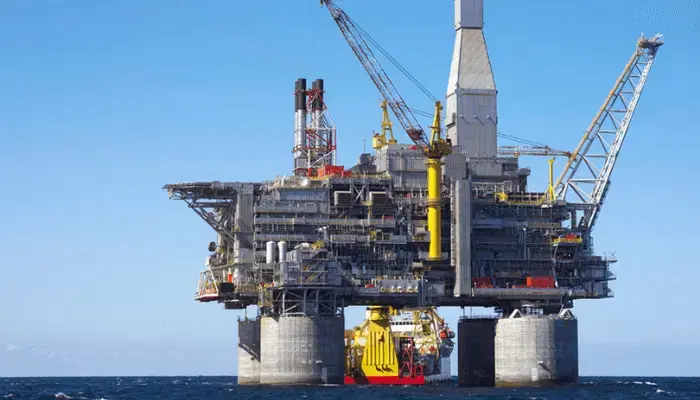
Nigeria’s ambition to raise crude oil production from approximately 1.8 million barrels per day to three million barrels per day illustrates the scale of the country’s unrealised petroleum potential.
For years, the country has struggled to maximise production despite possessing substantial hydrocarbon reserves.
The consequences are not confined to the petroleum industry. Every barrel that could have been produced and exported but is lost to operational constraints, inadequate investment or infrastructure challenges represents potential foreign exchange earnings and fiscal resources foregone.
This is particularly costly for an economy seeking to rebuild its external buffers while reducing dependence on borrowing.
Further commenting on the CBN- NNPC partnership, Cardoso said, “Now, let me first say that the MoU that was given some publicity is the culmination of many, many months of collaboration between the Central Bank and NNPC.
“This was not something that we just woke up and decided was a good thing to do. It is not. Apart from the fact that naturally we have a relationship, we have been regularly meeting with the leadership of the NNPC, with the view of exchanging ideas, understanding where the pain points were, where the pressure points were, and working together to ensure that those difficulties were eliminated.
“We felt that the responsibilities of each of the stakeholders should be clearly defined, and obviously, that is what will take us into the future and define the course of the relationship even better.”
The CBN governor said, “So, it was a natural step for us, and I believe that in doing so, the answer to your question with respect to the impact is that I believe the potential impact is quite significant.
“It is quite significant. Clearly, we should have a better working relationship, and that relationship, you know, I said that we had been having meetings at the leadership level, and now with the MoU, that will transcend all the way down both organisations.
“That is the idea: that we can work closer together. We have expertise, advisory-level expertise, which we intend to bring to bear on the activities of the NNPC. We believe that with our convening power, that convening power is something that we will also be bringing to help enhance the activities of the NNPC.
“And obviously, for them, they believe that they are working with a trusted partner, and that is very important in this stage of the development and the new reset that the NNPC is going through.”
Cardoso said, “Obviously, we all know the role of foreign exchange in our economy. We understand the role of the NNPC in generating foreign exchange for our economy.
“For that reason, it is important that as we strengthen that collaboration, we believe it will result in clearer and more transparent happenings in the foreign exchange market as it pertains to the NNPC and how that dovetails into the coffers of the central bank and, by implication, the federal government.
“So, I believe that we are at a very good place. Successfully implementing this will clearly, in my view, help to deepen foreign exchange mechanisms and help to diversify the very hard work that has already taken place.
“I do believe that it is a major milestone for us. But, as I said, beyond just foreign exchange, we are going to be collaborating in a whole host of other areas, which will reflect the diversity.
“There is a lot to be said for different institutions collaborating. It is a process, and we will see what that collaboration brings about in terms of returns.”
According to Cardoso, the critical deliverables should include more predictable foreign exchange inflows, improved transparency in the settlement of export proceeds, stronger coordination of petroleum-related financial transactions and better support for the country’s external reserves.
Similarly, Ojulari, acknowledged that the company inherited serious financial and operational difficulties following the appointment of its new board and management in April 2025.
He identified weak liquidity, challenged projects, significant loan obligations and refinery-related problems among the issues confronting the company.
The management subsequently reviewed proposed asset divestments and undertook loan restructuring to address financial leakages and improve sustainability.
These disclosures highlight the difficult starting point for the partnership.
A national oil company burdened by financing constraints, challenged projects and legacy obligations cannot easily mobilise the capital required to expand production, develop new fields and invest in infrastructure.
The PIA 2021 transformed NNPC into a limited liability company, giving it a commercial mandate and requiring it to operate with greater financial discipline and accountability.
But commercialisation also creates the need for a more sophisticated financing model.
Ojulari explained that the agreement would facilitate financial structures through which NNPC could raise capital against its balance sheet and underlying assets.
The distinction is important. If properly structured, asset-backed financing could enable the company to mobilise investment for productive projects without relying exclusively on conventional government-backed borrowing.
Nevertheless, Nigeria must be cautious about the implications of leveraging national petroleum assets. The commercial viability of projects, cost of capital, repayment obligations and potential exposure of public resources must be clearly established.
The country cannot afford to finance production expansion in ways that create new liabilities capable of eroding the very revenue gains the investments are intended to deliver.
Gas and opportunity to escape the crude oil dependency
Perhaps the more consequential long-term opportunity lies in natural gas.
The country’s economic exposure to crude oil price movements has repeatedly demonstrated the dangers of relying excessively on a single export commodity.
When international oil prices fall, government revenues and foreign exchange earnings come under pressure. When production is disrupted, the consequences are immediately transmitted to the country’s external position.
Natural gas offers an opportunity to broaden this earnings base while supporting domestic industrialisation.
The global energy transition is changing the structure of energy investment, creating both challenges and opportunities for hydrocarbon-producing countries.
The key question is therefore, how to mobilise the financing, technology and infrastructure required to commercialise its gas resources before changing global investment patterns further constrain access to capital.
Cardoso’s commitment to using the CBN’s international convening power to attract financial institutions into Nigeria’s gas development agenda is therefore significant.
The potential benefits go beyond export receipts.
Greater investment in gas infrastructure could support power generation, fertiliser production, petrochemicals, manufacturing and other energy-intensive industries.
This would create opportunities for domestic value addition, employment and industrial competitiveness while potentially expanding the country’s export earnings.
However, unlocking these opportunities will require commercially credible projects, reliable infrastructure, predictable regulations and financing arrangements capable of attracting long-term investors.
The CBN’s participation could help improve access to international financial relationships, but it cannot substitute for the fundamental reforms needed to make these projects bankable.
The naira dimension: reducing the dollarisation of economic activity
Another important consideration is the relationship between the country’s foreign exchange earnings and the use of foreign currency in domestic transactions.
CBN Deputy Governor, Operations, Ms. Emem Usoro, said the agreement would provide a clearer and more sustainable basis for cooperation between the two institutions, particularly in promoting international trade, foreign exchange inflows, energy financing and liquidity support for hydrocarbon monetisation.
She expressed confidence that the arrangement would strengthen Nigeria’s capacity to withstand external shocks, noting that the country’s gross external reserves had exceeded $55 billion.
Usoro attributed the improved reserves position partly to higher oil production and sustained diaspora remittances, adding that the MoU would support efforts to preserve and strengthen the country’s external buffers through improved export earnings.
NNPC Group Chief Financial Officer, Adedapo Segun, identified compliance with CBN guidelines recognising the naira as the sole legal tender for domestic transactions as one of the pillars of the agreement.
These includes aligning domestic payments, contractor settlements and foreign exchange conversions with applicable monetary regulations.
Wider economic implications
An economy that generates foreign exchange primarily through exports but increasingly conducts domestic transactions in foreign currency risks weakening demand for its own currency and deepening exchange rate vulnerabilities.
Where foreign currency becomes embedded in domestic pricing, contracts and settlements, exchange rate movements are transmitted more rapidly into the cost structure of businesses and households.
The CBN’s de-dollarisation objective is therefore connected to the broader challenge of restoring confidence in the naira as the principal medium of exchange.
However, sustainable de-dollarisation cannot be achieved through regulatory enforcement alone. It must be supported by macroeconomic stability, confidence in the domestic currency, predictable policies and a functioning foreign exchange market.
The NNPC’s commitment to align its domestic payment processes with CBN regulations could reinforce these objectives, particularly given the company’s extensive network of contractors, suppliers and commercial partners.
The agreement also provides for payment automation, digital innovation, cybersecurity and data protection.
These may appear to be operational issues, but they have important implications for the efficiency and integrity of financial transactions in a sector whose activities are critical to national economic security.
The real test is whether the oil economy becomes more accountable
Ultimately, the most important question surrounding the CBN-NNPC partnership is whether it can improve the accountability and efficiency of Nigeria’s petroleum revenue architecture.
The country has repeatedly announced ambitious production targets, financing initiatives and revenue projections. Yet the translation of these ambitions into stronger public finances and improved economic welfare has remained inconsistent.
The MoU introduces a more formal governance framework, including joint steering and working committees expected to monitor implementation against defined performance indicators.
This is essential because the success of the arrangement should be assessed through concrete economic outcomes rather than the frequency of consultations or the number of initiatives announced.
On the other hand, NNPC expects improved access to sustainable financing, stronger balance sheet management, increased production, greater gas monetisation and compliance with the financial and regulatory standards governing its operations.