

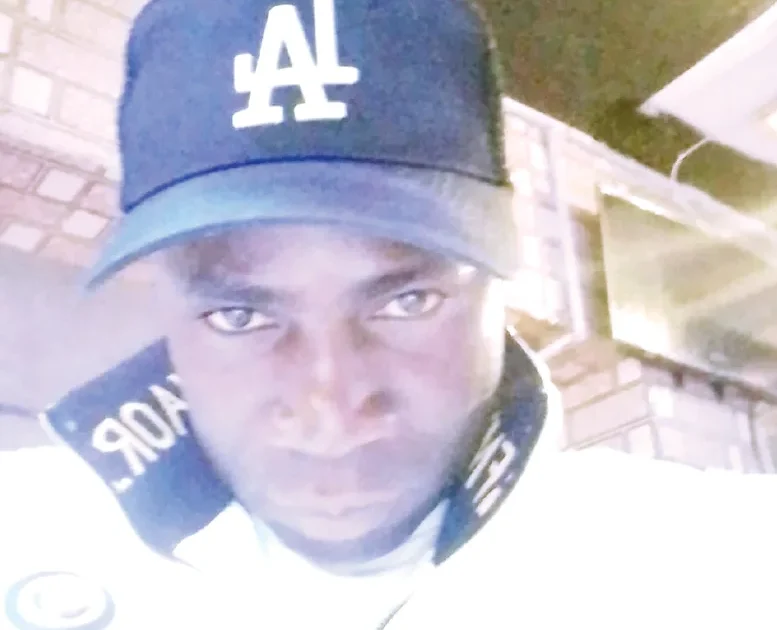
Nigerian businessman, Frank Aniachunam, tells BIODUN BUSARI how he fled Boko Haram attacks to South Africa, where he suffered business losses and survived near-death experiences before returning to Nigeria nine years later with nothing
What were you doing in Nigeria before relocating to S’Africa?
I was a businessman. I sold brocade fabrics in Maiduguri, Borno State. My friends and I dealt in different types of Senegalese brocade and other fabrics because people in the North liked them.
Unfortunately, Boko Haram began its activities and made Borno State its stronghold. I almost lost my life in one of the attacks in 2017. My shop was burnt down, and all the fabrics went up in flames. One of my friends was also killed in the attack. That made me leave for Abuja, where I started the process of applying for a South African visa.
How did you start afresh in S’Africa?
I arrived in South Africa on August 1, 2017, and stayed with a Nigerian friend for two years. He sold local foodstuffs, majorly Nigerian foods, in Johannesburg’s Central Business District, and I worked with him during that period. After two years, I opened my own shop in the same area.
I sold clothes, including designer jeans, T-shirts and boxers for both men and women. That part of Johannesburg’s CBD was known for its clothing businesses.
Who were your customers?
My customers were mainly Nigerians, but I also had patronage from other African nationals, including South Africans, Senegalese, Ethiopians, Malawians and Congolese. It was a booming business.
I used to buy my goods from a Chinese mall in Dragon City. However, when the trouble started in South Africa, they eventually demolished everything.
What were the financial obligations of running a business as a foreigner?
The practice was that business owners, particularly Nigerians, paid a lot of money to South Africans. We paid the owners of the shops or those who controlled the spaces where we operated. We also made payments to the government.
There was a payment arrangement referred to as a work permit. We paid the local authorities in Johannesburg and were issued slips as evidence of payment. Whenever anyone came to disturb us, we could produce the slips to show that we had fulfilled our obligations. The payment was made monthly.
I paid R2,000 to the owner of the space where I operated and R100 to the government. At the time, those amounts were equivalent to almost N200,000 and N10,000, respectively, every month.
Were those your only financial obligations?
No. I also paid rent for the apartment where I lived. I occupied a two-bedroom apartment, for which I paid the equivalent of about N500,000 monthly.
What led to the demolition of your shop?
I think there was a G20 Summit in South Africa in November 2025. After the event, rumours began circulating that South Africans wanted to chase all foreigners out of the country. We did not take them seriously because there had been several protests in previous years.
Later, the rumours became more specific, with reports that June 30 had been set as a deadline for Nigerians and other African nationals to leave the country.
One fateful morning, shortly after I had restocked my shop, armoured vehicles arrived at the Central Business District. There were nearly 100 vehicles, accompanied by police officers and volunteers. They announced that we had only two hours to close our shops and leave. They warned that everything would be destroyed if we failed to pack up.
I hurriedly began packing my goods to salvage whatever I could. They left, but before the two hours they had given us elapsed, they returned and began destroying everything. It was not even up to an hour after their warning. I was still packing my goods when they started demolishing the shops.
They targeted all foreigners operating in that area and brought bulldozers to pull down the shops. It happened on October 29, 2025. The goods in my shop were worth R250,000, equivalent to about N20m.
How did you survive after your shop was demolished?
I stayed at home because many Nigerians were afraid to go out. However, we still had to survive. Customers who needed goods would call me, and I would arrange to meet them around my residence.
I sold the few clothes I had managed to salvage. Some customers from Botswana and Zambia also came to my house to buy clothes.
Even then, there were times when I went out to meet customers and the police arrested me. They would still demand to see my work permit because they saw me carrying goods and knew I was going to meet customers. Sometimes, people also made false allegations against us.
Can you recall an instance when you were falsely accused?
One day, a South African man came to my shop and started scattering my goods. He accused me of selling drugs and threatened to shoot me. When he searched the shop and found no drugs, I told him that I knew my rights. I said that if he took me to court, I would win because I was not selling drugs.
He eventually apologised and left. However, the police could still come and arrest us.
What happened when the police arrested you?
I was taken to the police station several times. They would demand money, and I would pay.
On one occasion, they arrested me while I was carrying a large quantity of jeans I intended to sell. They took me to their station, and after I paid them, I returned to where they had kept the clothes. I had about 450 pairs of jeans, but they had taken almost everything, leaving fewer than 50.
I asked them what had happened to the rest, but they claimed they knew nothing about it. I wanted to cry. They did not treat me that way alone; many other Nigerians have had similar horrible experiences.
As I speak to you, there are many Nigerians in South African prisons whom I believe have been unjustly detained.
How do Nigerians end up in those prisons?
Whenever the police arrest us indiscriminately, they take us into custody. After 48 hours, they charge us to court under Section 49 of the Immigration Act. If an accused person does not have valid immigration documents, they may be taken to Sun City prison for three months. After that, the person would be transferred to a deportation camp in Lindela.
I have friends who have been in prison since July this year. One of them was sentenced to two years’ imprisonment, while another was at Lindela when I returned to Nigeria.
From there, they begin contacting your relatives to raise money for your flight ticket so that you can leave the country. If you cannot afford it, they may release you after six to eight months and give you 14 days to leave. If you fail to leave within that period, you risk being arrested again, and the cycle continues.
Didn’t Nigerians have access to lawyers when they were charged to court?
The South African government would provide a lawyer if you could not afford to hire one, but you already had an idea of how such cases would end before they started. I felt the government-appointed lawyers did not adequately defend foreigners.
As for Nigerian lawyers, their fees were very high. When I was arrested in 2023, I was accused of selling counterfeit clothes. I paid N2m to a Nigerian lawyer to defend me in court, and I won the case because the clothes were original.
Later, they came up with another allegation that I did not have the certificate required to sell the clothes. They told me that the requirement applied to all shops, not just those owned by South Africans.
Were you married in Nigeria or did you start a family in S’Africa?
I was single when I left Nigeria. When I got to S’Africa, I entered into a relationship with a white South African policewoman, and we lived together for six years. However, we were not officially married.
She became pregnant and had a boy for me, but the baby died three hours after birth. Medical experts said the baby was very big, weighing 4.9kg. We did not have any other children because she said she did not want to try again.
When I wanted to marry her and applied for documents to legalise our relationship, I was told that they were no longer issuing papers to Nigerians.
How did she react when you decided to return to Nigeria?
She could not come with me because she was also afraid of what Nigerians might do to her. Initially, she wanted to hide me in her father’s house, but South Africans were going from place to place, burning the houses of people who harboured Nigerians. She feared they might kill anyone found hiding a Nigerian. She was afraid something terrible could happen to either of us.
After thinking about it carefully, we agreed that the safest option was for me to return to Nigeria. We still communicate by phone.
I know a friend who is married to a South African woman and whose wife hid him during the crisis. However, he also plans to return to Nigeria this December because he says there is no business for him there anymore.
What finally convinced you that it was time to leave South Africa?
A few days before the June 30 ultimatum, I was walking along the street when South African volunteers attacked a foreigner with a stick, hitting him on the head. He fell, although he did not die. I ran away.
From that day, I stopped going out frequently. When the deadline passed, we stayed indoors for two days. People who ventured outside were beaten, while the police did nothing to stop the attacks.
That was when I decided it was time to return home. I eventually returned on July 15 and was among the fifth batch of returnees. My South African partner drove me to the Nigerian embassy in a police vehicle for safety reasons.
What did you bring back to Nigeria after nine years in South Africa?
I brought nothing back. I lost all my investments and money there. I can boldly say that I lost everything except my life. My life is the most precious gift I have, and that is why I am still here to tell my story.
I have no wife, child, money or house. All the money I made there was trapped in South Africa after everything was destroyed and I was forced to leave alongside other Nigerians. I have nothing to fall back on.
Didn’t you save or invest money in Nigeria during your nine years in South Africa?
I was investing and reinvesting in my business. There are many people who send money to Nigeria for investment, only for their relatives to defraud them.
If you kept your money at home in S’Africa, the police could storm your apartment and seize it. They would accuse you of dealing in drugs as an excuse to loot your money and belongings. This happened to many Nigerians.
The South African police targeted foreigners based on reports involving certain nationalities. For instance, if Tanzanians were caught with drugs, they would go after Nigerians, Zimbabweans and others in search of drugs. However, I believe they sometimes used such allegations as excuses to loot or extort foreigners.
I had planned to return to Nigeria at the end of 2027, but unfortunately, events took a different turn.
What assistance did the Nigerian government provide when you returned?
They gave us an orientation and provided packages containing food, soap and other essential items we would need in Nigeria. They also gave each of us an MTN SIM card loaded with N15,000 worth of airtime and 150 gigabytes of data.
What could make you return to South Africa?
Nothing could take me back to South Africa. I have seen enough. I no longer consider it a good place to live because crime and other atrocities are widespread. Nigerians are threatened almost all the time. South Africans simply do not want Nigerians there.
What have you been doing since returning to Nigeria?
I have been helping out at my brother’s shop, where he sells motorcycles and other items in Anambra State. I still hope for better days and pray that the government or well-meaning Nigerians will come to my assistance.