

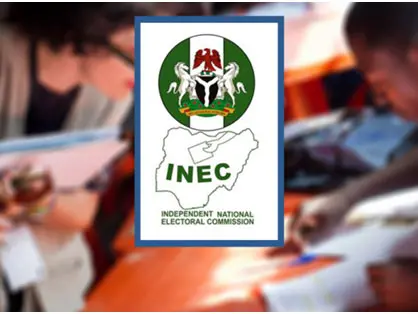
Ahead of preparations for the 2027 general elections, the Independent National Electoral Commission (INEC) has slated a nationwide mock accreditation and results upload exercise for November 28, 2026, to test its technology and identify possible challenges ahead of the polls.
The exercise, which will take place in 17,676 polling units across the country, is expected to provide an opportunity for the commission to assess the functionality of its Bimodal Voter Accreditation System (BVAS) and the procedures for accrediting voters and uploading simulated election results electronically.
However, some Nigerians are asking what exactly is INEC testing, why is the exercise important, and what should voters expect? Here are some of the things Nigerians should know about the exercise.
When, where will the exercise take place?
INEC has fixed Saturday, November 28, 2026, for the nationwide exercise, which will run from 8:30 a.m. to 2:30 p.m.
According to the commission, the exercise will be conducted in two polling units in each of the country’s 8,838 Registration Areas, bringing the total to 17,676 polling units.
The selected polling units cut across the 36 states and the Federal Capital Territory.
A breakdown of the selected polling units shows that Kano State has the highest number with 968, followed by Katsina with 718 and Oyo with 702.
Osun has 664, Akwa Ibom 658, Anambra 652 and Rivers 638, while Borno has 622 and Imo 610.
At the other end of the distribution, the Federal Capital Territory has the lowest number with 124 polling units, followed by Bayelsa with 210 and Gombe with 228.
A regional breakdown shows that the North-West leads with 4,002 polling units, representing 22.7 per cent of the total.
The South-West follows with 3,088 (17.5 per cent), while the South-South has 2,874 (16.3 per cent).
The North-Central accounts for 2,785 polling units (15.8 per cent), followed by the South-East with 2,489 (14.1 per cent) and the North-East with 2,418 (13.7 per cent).
The three geopolitical zones in the north account for 9,205 selected polling units, representing 52.1 per cent, while the southern zones account for 8,451, or 47.9 per cent.
In the North-West, Kano leads with 968 polling units, followed by Katsina with 718 and Jigawa with 574.
In the South-West, Oyo leads with 702, followed by Osun with 664 and Lagos with 490.
Akwa Ibom has the highest number in the South-South with 658, followed by Rivers with 638 and Delta with 598.
Anambra leads the South-East with 652, followed by Imo with 610 and Enugu with 520.
In the North-Central, Benue has the highest number with 552, followed by Niger with 548 and Kogi with 478, while Borno leads the North-East with 622, followed by Adamawa with 452 and Bauchi with 424.
The commission has requested all registered voters in the selected polling units to participate in the exercise.
Why is INEC conducting the exercise?
The mock exercise is part of INEC’s preparations for the 2027 general elections and is intended to identify and address possible technical and operational challenges before the polls in January.
The commission said the exercise would help test BVAS functionality, assess accreditation procedures and examine the process of uploading simulated election results.
It is also expected to provide an opportunity to assess the readiness of the commission’s electoral technology following concerns over technical challenges during the 2023 general elections.
INEC Chairman, Prof. Joash Amupitan, had earlier announced the exercise during a dialogue at Chatham House in London, organised in partnership with the Kimpact Development Initiative.
He said the exercise would simulate the presidential election and help the commission verify its accreditation and electronic result transmission systems ahead of 2027.
What will INEC be testing?
The Bimodal Voter Accreditation System (BVAS) is an electronic device used by INEC to verify the identity of voters at polling units through fingerprint and facial recognition.
It is designed to ensure that only duly registered and eligible voters are accredited before casting their ballots.
During the mock exercise, INEC intends to test the functionality of the devices and assess how effectively they can carry out accreditation procedures under simulated election conditions.
The exercise will also involve uploading simulated election results to the INEC Result Viewing Portal (IReV), which allows members of the public to view polling-unit result sheets electronically.
INEC has asked participating voters to track the simulated results on IReV through the portal address: irev.inec.nigeria.org.
The exercise is also expected to help the commission identify technical difficulties that could affect accreditation and electronic result uploads during the actual elections.
INEC has announced several adjustments to its BVAS deployment ahead of the 2027 general elections.
The commission has reduced the maximum number of registered voters assigned to one BVAS device from 1,250 to 850.
Under the new arrangement, polling units with more than 850 registered voters will be provided with multiple devices to reduce pressure on individual machines and minimise delays during accreditation.
Amupitan also disclosed that the commission had procured additional BVAS devices and was constructing climate-controlled storage facilities across the states to address concerns over device malfunctions linked to extreme heat and storage conditions during the 2023 elections.
The commission said the improvements were part of efforts to strengthen its technological capacity and prevent a recurrence of previous operational challenges.
The November 28 exercise will provide an opportunity to assess the performance of the devices and the effectiveness of the new arrangements.
For the 2027 elections, INEC Chairman, Amupitan, said the commission had introduced additional technical safeguards to prevent inaccurate results and figures indicating over-voting from being uploaded to the portal.
He explained that the commission’s post-2023 assessment identified collation centres as a major source of problems in election result management.
He said the new safeguards are intended to ensure that results are properly validated at the polling-unit level before being uploaded to IReV.
Will ordinary voters participate?
Unlike some technical tests conducted exclusively by electoral officials, INEC has specifically requested the participation of registered voters in the selected polling units.
In its announcement on social media, the commission said all registered voters in the selected polling units should participate in the exercise and track simulated election results on IReV.
This means voters in the affected communities have a role to play in the exercise.
However, INEC’s public announcement has not fully explained whether participants will be required to present their Permanent Voter Cards (PVCs), whether mock ballot papers will be used or how many voters are expected to participate at each polling unit.
Voters should therefore check the published list to establish whether their polling units are among those selected.
Why has the exercise attracted criticism?
Despite its stated objectives, the exercise has attracted criticism from the African Democratic Congress Presidential Campaign Council (ADC-PCC), which has called on INEC to postpone it.
The council, through its Director of Media and Publicity, Kola Ologbondiyan, argued that political parties were not given sufficient time to prepare, mobilise and train their agents for an exercise of national importance.
It claimed that INEC’s invitation letter, dated November 16, gave political parties until November 18 to submit the names of their participating agents.
The council argued that the short notice could undermine meaningful participation by political parties.
What should Nigerians look out for?
Beyond the conduct of the exercise, its outcome will be important in determining how prepared INEC is to deploy its technology during the 2027 elections.
Some of the critical issues to watch include the ability of BVAS devices to accredit voters without interruptions, the speed and reliability of the accreditation process, the effectiveness of electronic result uploads and the commission’s response to possible technical failures.
The level of participation by registered voters, political party agents and election observers will also be important in assessing the exercise.
INEC’s willingness to publish a detailed report on the outcome, including identified challenges and corrective measures, will be another important consideration.
The November 28 exercise is more than a routine technical test. It is an opportunity for INEC to demonstrate the readiness of its electoral technology and address concerns arising from previous elections before Nigerians return to the polls in 2027.
However, the credibility of the exercise will depend not only on the successful deployment of BVAS and electronic result-upload systems but also on transparency, stakeholder participation and the commission’s willingness to address any shortcomings identified.
Ultimately, Nigerians will be looking beyond INEC’s announcement to see whether the exercise can provide convincing evidence that the commission is better prepared to manage the technological and operational demands of the 2027 elections.
UPDATE NEWS:
Nigerians can now invest ₦2.5 million on premium domains and profit about ₦17-₦25 million. All earnings paid in US Dollars. Rather than wonder,
click here to find out how it works.