

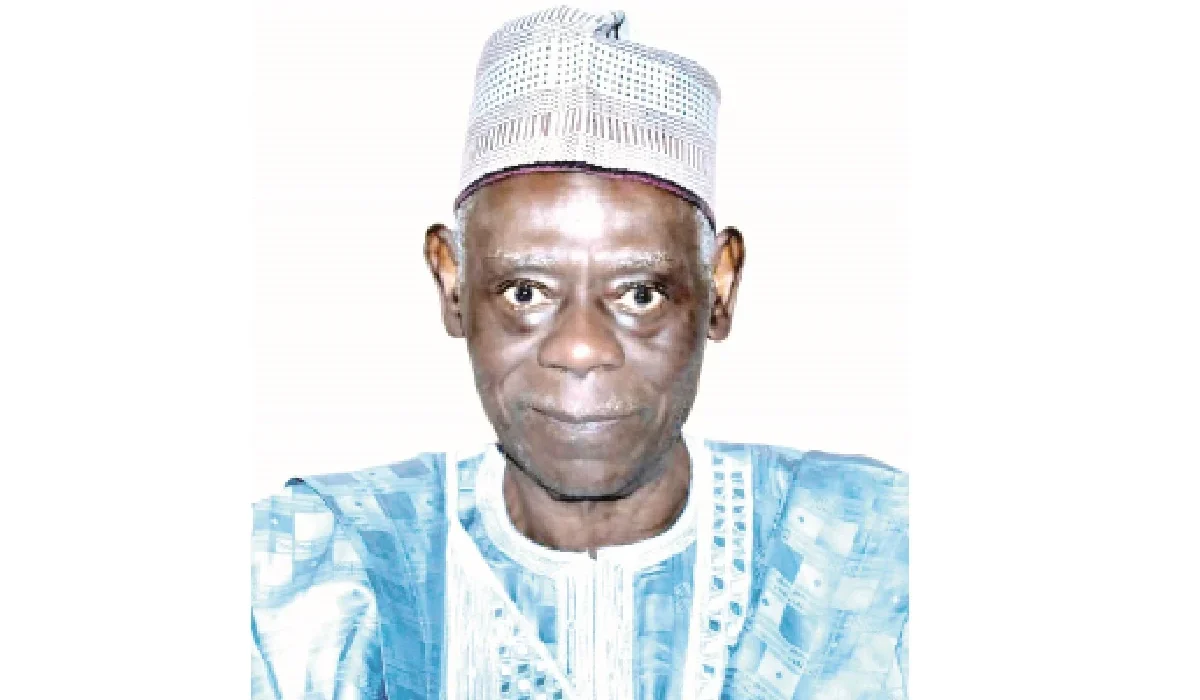
As electioneering peaks ahead of the general election, the frightening scale of political intolerance and violence, voter register, role of law enforcement agencies, as well as the place of institution building, are some of the issues tackled by the former National Secretary of the Arewa Consultative Forum (ACF), Mr Anthony Z. Sani, in this interview with KUNLE ODEREMI.
THE tempo of politicking has surged lately ahead of the general election with political gladiators crisscrossing the land. How do you see the pattern of electioneering across the parties, with just a few weeks to the crucial election?
As usual, the political parties and their candidates are on the road trying to sell their manifestos and candidates to the electorate in the hope of securing the needed electoral mandate for execution. And because the campaigns are not issue-based, they are disrupted by opponents. Hence the ensuing violence reported across the political parties. Both the sponsors of the intolerance and political violence should stop doing so in the interest of the country. The world is watching our practices of multiparty democracy. As I have said several times, democracy may differ in forms, but when it comes to its three elements of justice, liberty and common decency, democracy is the same and universal. Those who crave a home-grown democracy that is intolerant and violent might as well reinvent the wheel and redefine justice and evil.
So, what does the rising level of political intolerance evident in violence, physical assault, threats and counter-threats so far between the opposition and the ruling party portend for the election, nay democracy in Nigeria?
I am happy you used the words “rising incidence of intolerance and violence”. This is because intolerance and violence during campaigns are not new in Nigeria. They have been with us during the First, Second and Third Republics. Recall the Wild, Wild West during the First Republic. We also saw the “Ikemba Front” and the “Nwobodo Vanguard”, which clashed frequently during the Second Republic. The Third Republic did not register many incidents of violence because it did not last long. What is more, the political parties were only two with a tinge of ideology of LITTLE TO THE LEFT and LITTLE TO THE RIGHT that accounted for fewer defections. The level of intolerance and violence in the Fourth Republic has been on the increase since 1999. This is reminiscent of frequent spikes in vices in all aspects of our national life. This is because there has been a collapse in national ideals and moral values, which find expression not only in insecurity, but also in intolerance and violence during political campaigns.There are many factors for the rise in the level of political intolerance. Politics is about the fastest way of becoming rich in Nigeria. And because anybody can claim to be a politician, many people of shady character rush into politics to become rich. And all that is needed to achieve such a goal is to win the elections at all costs. In Nigerian politics, it is a zero-sum game where winners take all, while losers are left to wallow in abject poverty. Other factors include the availability of an army of youths, who are unemployed, poor and out of school. Their employment as thugs is cheap and the thugs feel some sense of belonging. There is also the lack of ideology among the political parties. The only difference is the ability to win elections by any means, one of which is to sponsor thugs to be intolerant and violent.
There is also the unbridled impunity because offenders are not punished. If the thugs, their sponsors and law enforcement personnel found wanting are punished, the incidence of intolerance and political violence would reduce substantially.
Yes, talking about the attitude of law enforcement agencies towards the rising level of impunity that has almost overshadowed preparations for the general election, there seems to be no serious prosecution and conviction of perceived perpetrators of political violence in the land?
Either because of an insufficient number of trained law enforcement agents or for reasons of tolerance of impunity in most aspects of our national life, the security personnel found wanting are not punished due to a lack of law enforcement. The government should brace up and sanction all law enforcement officers who tolerate the activities of thugs and their sponsors.
Is this apparent lackadaisical attitude suggestive that the law enforcers have been overwhelmed by the scale of political intolerance?
Apart from the challenges of a paucity of trained security personnel, there is the “Nigerian factor” of looking the other way because they have been compromised by the sponsors of thuggery. To be effective, there must be a sufficient number of trained law enforcement officers who are motivated to enforce the law. And when they fail to do so, they should be punished by way of prosecution. There should be no room for corrupt practices.To what extent have the parties and their candidates themselves adhered to the rules of the game after unveiling their manifestos and blueprints that ought to be the bond with voters after the elections? Have the parties and candidates been engaging in real issues that should determine informed choices by the electorate? If the campaigns were issue-based, there would be no need for intolerance and political violence. It is the failure to see democracy as a contest of ideas and reasons, and not a bullfight, that inspires intolerance and political violence. If the Independent National Electoral Commission (INEC) can enforce the electoral laws by punishing offenders who sponsor intolerance and violence, including the disqualification of candidates who sponsor intolerance and violence, the incidents would reduce substantially.
At the dawn of every election cycle, parties sign peace pacts with glitz and bliss. Yet, the vicious cycle of violence persists. Does the peace pact signed by parties/candidates appear significant, given the reign of impunity and violent culture manifesting in the final build-up to the 2027 elections?
If despite the existence of the laws governing elections, people sponsor thugs to cause violence during campaigns, it would be too much to expect the peace accord to be very effective. The challenges faced during elections are because the fight against corruption by both punitive and preventive measures is yet to yield the desired results. Unless the fight against corruption succeeds to a reasonable level, the vices in politics will continue. Only strong democratic institutions and an improvement in our sense of national ideals and moral values can bring about peaceful electoral processes.
Some stakeholders in the Nigerian project, particularly the opposition parties and their candidates, have expressed doubts about the neutrality of INEC in the coming elections. They raised issues concerning the voter register even after the commission expunged more than one million curious names from the register, as the opposition contends the issues border on the integrity of INEC, nay the nation’s electoral system. What’s your take on the raging debate?
While I agree that no electoral system is perfect, and there is a need to point out shortcomings for performance, it is not right for political leaders to help undermine the system and make people lose faith in our democracy. Even in America, there are still challenges in their electoral processes and practices. This is because nation-building is a continuous process. Order, justice, liberty, common decency and prosperity for all are never the natural order of things. They are attained through ceaseless hard work by not only leaders, but the led as well.
For example, in 2020 President Trump was caught on the phone asking Mr Brad Raffensperger, the Secretary of State in charge of elections in Georgia, to look for 11,780 votes to enable him to prevail in Georgia. But the secretary, who is also a Republican, refused to oblige him. Reason: the secretary regarded America more than his personal interest.President Trump also alleged Dominion Voting Systems rigged the elections for the opposition. The allegations could not be proved. In fact, in those 2020 elections, President Trump and his allies went to court with more than 60 cases and failed in all of them.The Supreme Court had to tell him that saying elections were rigged did not make it so. It is therefore not correct for the opposition to cast aspersions on INEC and make Nigerians lose faith in the electoral umpire.
How can the country get it right this time, as elections in Nigeria, over the years, have been largely mired in controversies and rejections?
Politics should not be the path to quick riches. We should reduce the prize. Nigeria should punish both the sponsors and the thugs. Politics should not be a zero-sum game, where the winner takes all, while the loser is in total ruin. There should be roles for the opposition lest politics become a matter of survival.
WATCH TOP VIDEOS FROM NIGERIAN TRIBUNE TV