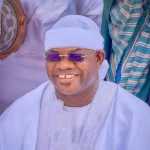


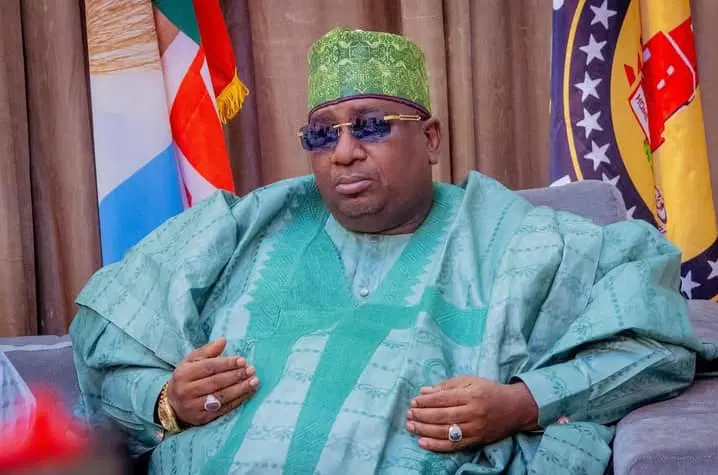
Gov Nasir Idris of Kebbi State.
By Johnbosco Agbakwuru
Governor Nasir Idris was the National President of the Nigeria Union of Teachers and Deputy President of the Nigeria Labour Congress before his election in 2023. In this interview, he says his emergence was divine as becoming a Governor was not his initial plan.
He says that his labour background is the reason his administration places paramount to workers welfare and he has approved implementation of ₦70, 000 transportation allowance to state workers and promises to be the first state to pay minimum wage when new one is agreed. Governor Idris says the APC will not allow the PDP to win presidential election in the state again.
He says the state has enjoyed tremendous support from President Tinubu. He vows that no coalition will unseat the APC in Kebbi
Excerpts:
Coming from a labour background, having served as Deputy President of the Nigeria Labour Congress (NLC) and President of the Nigeria Union of Teachers (NUT), how has the transition from being a labour leader to becoming a politician and governor been? To what extent have the ideologies and experiences you acquired in the labour movement influenced your decisions and policies as governor?
As a labour person, even though I am now on the other side of the divide, there is no way I can forget the labour movement. It was the labour movement, particularly the Nigeria Labour Congress (NLC) and the Nigeria Union of Teachers (NUT), that made me what I am today. Therefore, I have no reason whatsoever not to appreciate these organisations and their leaders.
My ambition in life, throughout my journey in the labour movement, was to become the number one worker in Nigeria and the number one teacher in Nigeria. By the grace of God, I achieved both ambitions. God gave me the opportunity to subject myself to an election, and I emerged as President of the Nigeria Union of Teachers. I was also elected Deputy President of the Nigeria Labour Congress.
I also had the ambition of becoming the number one worker in Nigeria, and I was working towards that. A majority of the affiliate unions had endorsed me and agreed that, when the time came, they wanted me to lead the organisation. We were already working towards that ambition.
However, God had a different plan for me. What I was looking for was not what He had destined for me. He had a higher responsibility in mind.
I was sitting in my house when the opportunity to contest the governorship of Kebbi State came. At the time, the sitting governor had already indicated his preference for the then Attorney-General and Commissioner for Justice to succeed him.
The governor invited us and told us that all of us were his brothers and that he had nothing against whoever emerged as his successor. However, he preferred the Commissioner for Justice to take over from him. He asked for my opinion.
I told His Excellency that I had accepted his position. I said I was not going to discuss it with anybody because, morally, he was the sitting governor and had the responsibility to decide whom he wanted to succeed him. I assured him that whoever he chose, I would support that person.
That was how events unfolded. I was even the person who led the delegation that went to submit the nomination form at the national secretariat of the All Progressives Congress (APC). The form was filled out in my house in Birnin Kebbi, and I personally led the delegation to submit it.
But God had already destined that position for me.
One day, I was sitting in my house when somebody called me and asked, “Are you Comrade Nasir Idris?”
I answered in the affirmative. He then asked whether I was not contesting the governorship election in Kebbi State. I told him I was not the one contesting, explaining that we were supporting the Commissioner for Justice.
He responded that the Commissioner had not told me that he was no longer interested in contesting. He advised me to go and purchase the nomination form because, based on his consultations, he believed the people loved me and wanted me to lead them.
The man ended the call without introducing himself. After about two or three minutes, I decided to call the number back and identify the caller. I tried searching for the number, including through Truecaller, but I could not find it.
That is how God works. I subsequently contacted the sitting governor and informed him that I had made up my mind to purchase the form and contest the governorship election.
That is why I always describe my emergence as governor as divine.
The journey was, however, very challenging. Many influential members of the APC had decided to leave the party and join the opposition PDP. They joined forces with a retired military general who had left the military only about five or six months earlier to venture into politics.
They mounted a campaign against me, questioning how a comrade and a teacher could govern a state. Some people believed that I could not preside over the affairs of a state because of my background as a labour leader and teacher.
That was where I became a little uncomfortable. I wondered why anybody would think that a teacher or a labour leader could not govern a state successfully.
But the workers and the masses stood by me. Teachers, market women, artisans, labourers, drivers, and ordinary people believed in me. I subjected myself to the electoral process, and the people expressed their preference.
The election was conducted in the 21 local government areas of Kebbi State, and I won in 18 of them. I was leading my opponent by 45,278 votes when the election was declared inconclusive.
Two weeks later, the supplementary election was conducted. Out of about 30,000 votes cast, I secured approximately 19,000 votes, and I was subsequently declared the winner.
Within 24 hours, my opponent took the matter to the tribunal, with the intention of taking away the mandate freely given to me by the people, including workers and teachers. By God’s grace, we won at the tribunal. The matter subsequently went to the Court of Appeal, where we also prevailed. Eventually, it was taken to the Supreme Court, and we won.
That was how God vindicated the people of Kebbi State and gave us the opportunity to lead them.
So, my background as a teacher and labour leader prepared me for the responsibility of governance. I had managed responsibilities at the local government, state, and national levels, as well as participated in regional and international labour engagements.
I had presided over the affairs of the Nigeria Union of Teachers, an organisation with a large membership of educated
professionals. I also had the opportunity to act as Deputy President of the NLC before I resigned to pursue my political ambition.
Honestly, when I became governor, I did not find it difficult to adapt to the responsibilities of governance because of the experience I had acquired over the years. God has helped me, and that is why, when I assumed office, I assured the people of Kebbi State that they had no cause to worry.
I was born in Birnin Kebbi, grew up there, worked there, and led teachers and workers in the state. Therefore, I understood their challenges and aspirations.
I made several promises during the electioneering campaign, and by God’s grace, I have fulfilled almost 90 per cent of them. I cannot claim to have fulfilled 100 per cent because no leader is perfect.
Before the election, I established a five-man committee to document every promise I made during our campaigns. Wherever I went, whenever I made a promise, the committee recorded it.
When we eventually formed the government, the committee submitted its report, reminding us of the promises made to the people in different local government areas.
For instance, I promised workers that I would provide a conducive working environment by bringing all government workers under one roof.
At the time, the existing secretariat could no longer accommodate all the workers. I assured them that I would construct a befitting secretariat that would bring them together, promote synergy and cooperation, and create a more conducive working environment.
Today, we have achieved that. Our new secretariat has a capacity of about 25,000, and workers are now accommodated in the same complex.
I also promised workers that I would address their welfare concerns, particularly the issue of the minimum wage.
At the time, workers in Kebbi State were receiving a minimum wage of ₦30,000. I told them they had nothing to lose by supporting me because I was one of them and understood their problems.
I assured them that they would not regret supporting my administration, and they stood by me.
Today, we have implemented a minimum wage of ₦75,000. We have also addressed the welfare concerns of teachers, including those who were previously not enjoying the minimum wage.
I told them that the era of treating teachers as second-class workers in Kebbi State was over. I am one of them, and I understand their challenges.
When we constituted committees to negotiate the minimum wage, organised labour presented its position, while the government also presented its own proposal through its committee. Eventually, both sides met and harmonised their positions.
The difference between the two proposals was just about ₦108 million. I told my government’s negotiating committee that, as a former labour leader, I had a responsibility to demonstrate leadership by example and ensure that workers received what was due to them.
I therefore directed that we should adopt labour’s proposal.
That was what we did to ensure industrial peace and harmony. Today, you hardly hear complaints from workers that they have been shortchanged. They are happy because they believe one of their own is in government and understands their concerns.
Kebbi is among the few states that have implemented a ₦75,000 minimum wage. However, considering the current economic realities and the declining purchasing power of workers’ salaries, there are still concerns about the hardship they face. Does your administration have any plans to provide additional interventions to cushion their economic difficulties before the next minimum wage negotiations are concluded?
I have just returned from a journey, and by God’s grace, I am aware of the intervention the Federal Government has approved for workers.
As a former labour leader, I believe something should also be done for workers in Kebbi State. I am returning to the state tomorrow, but because of this interview, I decided to ask you to come today before I depart.
I can assure you that workers in Kebbi State will not be left out.
Can you give us further clarification on the intervention?
I have already constituted a committee, in writing, under the leadership of the Head of Service. The committee is working, and by God’s grace, when I return, I will communicate with the Head of Service.
The Federal Government has approved a ₦70,000 transport allowance for workers. Is Kebbi State prepared to implement the same amount, or possibly pay more?
I have already made my position clear. Whenever the Federal Government increases workers’ salaries or approves an intervention for workers, Kebbi State will be among the first states to implement it.
We cannot shy away from the truth. I understand that the purchasing power of the minimum wage has been significantly eroded by the prevailing economic situation.
The President has done well by approving an additional ₦70,000 transport allowance to cushion the effects of the hardship being experienced by Nigerian workers.
Governors must also demonstrate responsibility by ensuring that appropriate measures are taken to reduce the hardship facing their workers.
So, yes, I can assure you that workers in Kebbi State will benefit from an additional intervention. That is why I have already constituted a committee. I do not want to pre-empt its recommendations, but definitely, workers in the state will see an improvement in their welfare, by God’s grace.
Beyond the implementation of the ₦75,000 minimum wage, what other concrete achievements has your administration recorded in improving the welfare and working conditions of workers in Kebbi State?
I think I have mentioned some of them, particularly the implementation of the minimum wage and the construction of the new secretariat.
Let me also emphasise that my administration does not owe workers’ salaries. We do not owe pensions, gratuities, or other retirement benefits.
We have also implemented promotions and annual salary increments for workers.
We believe in prudent management and financial discipline. That is how we have been able to meet our obligations to workers despite the competing demands on government resources.
We have also taken steps to address unemployment, particularly among young graduates.
I know what it means for a young graduate to remain unemployed after completing his or her education. Having been a labour leader, I understand the implications of unemployment and the importance of creating opportunities for people.
That is why my administration has recruited 2,000 teachers and another 2,000 health workers, including doctors, nurses, pharmacists, and other health professionals.
We have also employed workers in other categories, including security personnel.
Beyond that, we have addressed the issue of casualisation in the state civil service. As a labour leader who fought against the casualisation of workers, I cannot become a governor and allow the same practice to thrive under my administration.
We have therefore absorbed many casual workers into the civil service.
Kebbi State was previously ranked among the states with relatively low internally generated revenue (IGR). However, there have been reports of improvements in the state’s revenue performance and ranking. How has your administration been able to achieve this?
I do not entirely agree with some of those rankings. Sometimes, people sit down in Abuja and calculate figures without going to the actual places to establish what is happening.
However, I know that we have made efforts to improve our internally generated revenue.
When you talk about revenue generation, you must also talk about revenue leakages. We have worked hard to block those leakages and ensure that government revenue is properly accounted for.
That is why our internally generated revenue has increased.
Can you give us specific figures showing the state’s IGR before you assumed office and what it is currently generating?
I would not want to give you figures that may not be entirely accurate. I do not want to quote figures that could turn out to be incorrect.
But I can assure you that there has been a significant improvement in what we generate now compared with what we were collecting before this administration came into office.
With the 2027 general election approaching, workers in Kebbi State would want to know what additional benefits they should expect if you are re-elected for a second term. What new welfare packages do you have in mind for them?
By God’s grace, by 2027, we will also have a new minimum wage because the government has already put a committee in place to look into the issue.
Even if I do not introduce any entirely new package, I believe that sustaining the existing welfare arrangements is already a significant achievement.
For instance, workers want to be assured that when they retire, their gratuities and pensions will be paid.
Previously, some workers were paid only a percentage of their gratuities, such as 10, 15, or 20 per cent. But today, my administration pays 100 per cent of workers’ gratuities.
When a worker retires, we calculate the full entitlement and pay it.
We have also improved the pension payment arrangement. If a worker retires and his or her retirement falls within the applicable payment schedule, the person’s name is included for pension payment that month.
In the event of a worker’s death, the government also ensures that the family receives the appropriate benefits.
I believe that sustaining these arrangements is important. Workers must have confidence that the government will fulfil its obligations to them, even after retirement.
Beyond that, we are introducing additional welfare packages.
For instance, we have acquired about 155 housing units through the Federal Mortgage Bank, while another 250 housing units are currently under construction specifically for workers.
We also have about 75 existing housing units that we are renovating. All these houses are intended for workers.
The housing programme is particularly important because I understand the challenges workers face in securing decent and affordable accommodation.
Some of these houses are expected to be commissioned in December, and by 2027, we intend to introduce additional packages that will further improve workers’ welfare.
As a former labour leader, I understand what workers need, and we will continue to do everything possible to ensure that they enjoy the benefits of good governance.
With the 2027 general election approaching, how confident are you that the APC will retain Kebbi State, particularly given the political activities of opposition figures, including former Vice-President Atiku Abubakar, who is also working towards the next election?
By God’s grace, we are confident.
An election is something you can assess based on your performance and what you have done for the people. It is not simply about belonging to the APC or any other political party.
There is no administration that has introduced as many different packages and interventions for Nigerians as the present Federal Government under President Bola Ahmed Tinubu.
Let me speak specifically about Kebbi State. I believe we have never had it so good in terms of development as we have under the present administration.
My philosophy of democracy is that governance must bring development projects to the doorsteps of the people.
Kebbi State has benefited tremendously from the infrastructure development taking place under President Tinubu’s administration.
For instance, there is an ongoing road construction project linking Yauri to Ngaski Local Government Area. The road is known as the Malando Road.
These are the kinds of development projects that people can see and appreciate.
By God’s grace, we believe that our performance, the support of the people, and the developmental projects we have delivered will speak for us when the time comes.
You have spoken about several federal infrastructure projects in Kebbi State. What has your administration done to attract federal government interventions, particularly in road construction, and how are these projects improving connectivity across the state?
With the coming of this administration, when we went on our campaign tours, the people made several appeals to us concerning abandoned road projects. One of the major concerns they raised was the poor state of the roads and the hardship they were experiencing.
We subsequently met with Mr. President and drew his attention to these challenges. In particular, we discussed the abandoned road project and the reasons behind its delay. When we engaged the contractors, they explained that inadequate funding was responsible for the abandonment.
I personally took up the matter with Mr. President, and funding was subsequently made available to the company. Today, the contractor has returned to the site, and work has resumed.
There is another federal government road project linking Augie to Kangiwa and Kamba in Kamba Local Government Area. That road was originally awarded for construction during the administration of the late Alhaji Shehu Shagari in 1979, when he was governor of the old Sokoto State. Since then, successive administrations have done very little to address the condition of the road.
However, President Tinubu’s administration has awarded the contract, and the contractors are now working day and night to ensure its completion.
There is also the Koko–Zuru–Kala-Kala road project, which the Federal Government has awarded.
Another major road project is the Koko–Dawesulu–Zuru road, which is one of the worst roads in Kebbi State. My administration is currently handling its construction on behalf of the Federal Government.
I appealed to Mr. President to intervene because the contractor had been on site since February 2018 but had not constructed up to four kilometres of the road.
I requested that the contract be revoked and awarded to a reputable construction company capable of delivering the project, or that the responsibility be transferred to another competent contractor.
Following my appeal, the Federal Government permitted the Kebbi State Government to undertake the construction in line with federal government specifications. That is what we are doing.
The project is about 87 kilometres long, and we have divided the work among three construction companies: Abib Nigeria Limited, ZBCC, and JNIC. They are working day and night to ensure that the road is completed.
Previously, travelling from Koko to Zuru, particularly through the difficult sections of the road, could take about six and a half hours. The road was in a terrible condition.
Today, because of the work we are doing, the journey has been reduced to about two hours. By the time the project is completed, travelling from Koko to Zuru will take approximately one hour.
These are some of the infrastructure projects we have been able to attract and execute through our collaboration with the Federal Government.
Some Nigerians believe that the economic policies introduced by the present administration have brought more hardship than relief to the people. What is your response to such concerns?
I believe that the only permanent thing in life is change.
If we are going through difficulties today and, as a result of the decisions we are taking, our children do not have to experience the same hardship tomorrow, then we have succeeded.
But if we continue to allow things to remain the way they are, all of us, including our children, will continue to suffer.
We must be prepared to make certain sacrifices today so that future generations can enjoy a better country.
I believe in these policies because, sometimes, previous governments may have lacked the courage to introduce certain reforms. Whenever a new policy is introduced, people are bound to feel its immediate impact, particularly when it involves changing an existing system.
However, every policy has its long-term objectives and benefits. At the end of the day, Nigerians will appreciate the results.
That is why President Tinubu has consistently appealed to Nigerians to remain patient and bear with the present challenges. I believe that, at the end of the tunnel, Nigerians will have reasons to smile.
How would you assess the performance of your administration in the health sector, particularly regarding the state health insurance scheme? How many people are currently benefiting from the programme?
When I assumed office, I discovered that there were challenges with the health insurance scheme. However, we have made significant progress.
As I speak to you, about 300,000 people are benefiting from the Kebbi State health insurance scheme, known as KACHIMA. We are also planning to enrol an additional 50,000 people by early next year. By God’s grace, we will introduce that additional coverage.
In terms of healthcare infrastructure, I inherited several general hospitals that had not undergone meaningful renovation for many years, with some dating back to 1978.
When I came into office, I decided that we must address the situation. I therefore embarked on the comprehensive renovation of these hospitals.
I also established three additional general hospitals to address the needs of communities that had been demanding improved access to secondary healthcare services.
Out of the 33 general hospitals in the state, we are currently working on 27. Some have been completed and equipped, while equipment for others is ready and awaiting the completion of ongoing construction and renovation work.
We intend to address the remaining hospitals after completing the current phase.
We have also made significant interventions in primary healthcare. Kebbi State has 225 primary healthcare centres, and we are working on 175 of them. We are also equipping these facilities because we understand the challenges facing the health sector, particularly at the grassroots.
Unfortunately, some people have attempted to misrepresent the situation in our hospitals for political reasons.
At one point, an opposition candidate visited a hospital and presented images of an elderly man lying on a bed without a mattress or blanket, among other things, in an attempt to portray my administration negatively.
However, the hospital being presented was not in Kebbi State. It was in Kafur, Katsina State.
If you want to contest an election against me, that is your right. But you should subject yourself to the people and tell them what you have done for them. You should not resort to presenting misleading information about another state to discredit an administration.
I remember when I was invited to participate in a political debate. I was asked to come and explain what I intended to do for the people.
I told them that the issue should not simply be about what we intended to do in the future. We should also examine what we had already done.
Everybody who participated had attained significant positions in their respective fields. Some were generals in the Nigerian Army, while others had occupied important public offices.
I asked them: What have you done with the positions you have held? How many people have you employed? What projects have you attracted to your communities? What have you done to improve the lives of the people?
For instance, some of them had attained the rank of general in the Nigerian Army. How many people from their communities had they helped to secure recruitment into the military?
I am not interested in making promises alone. I can point to what I have done.
I can tell you the number of teachers and other workers I have helped secure employment. I can also take you to communities where we have executed projects.
Even in my own primary school in Birnin Kebbi, I have renovated and constructed several classrooms, provided electricity and water, cleaned up the environment, and supplied furniture.
I challenge those who are criticising my administration to identify a school they attended and show us whether they have provided even a single table and chair for that school.
I am putting that challenge on record.
I do not need to spend all my time telling people what I have done. The people of Kebbi State know my contributions before I became governor, and they can also assess my performance in office.
You spoke about the former Attorney-General and Commissioner for Justice, who was initially being considered as your party’s preferred successor to the former governor. We know that he has now left the APC. There have been allegations and counter-allegations from both camps, with some suggesting that he was forced out of the party, while others say he is unhappy with President Bola Tinubu. Is he actually angry with the President, and was he pushed out of the APC?
I do not want to go into that matter.
But if he has left the APC, is he not someone who benefited immensely from the APC?
Since Nigeria gained independence, has there been any Minister of Justice who has enjoyed the kind of opportunities and privileges he enjoyed while serving in that position?
I believe that is enough for people to reflect on.
Your earlier raised concerns about people sitting in Abuja and presenting inaccurate figures about Kebbi State without properly investigating the situation on the ground. As we approach the 2027 general election, there are also concerns about misinformation and fake news. Is this something that worries you, and what would you advise Nigerians, particularly the people of Kebbi State, about verifying information before accepting it?
Fake news is a general problem in this country. Nobody can shy away from that reality.
However, I do not believe our people will simply accept fake news because they know what an administration has brought to the table.
You can be a minister, even the most powerful minister in the country, but if you have not attracted any meaningful project or development to the people of Kebbi State, what exactly are you asking them to judge you on?
Even if you are a minister, you should be able to use your position to attract development to your state.
For instance, the Federal High Court did not have its own permanent building in Kebbi State. It was operating from a temporary facility provided by the state government.
It was through my appeal to President Tinubu that the construction of a permanent Federal High Court building in Kebbi State commenced under this administration.
That is a practical example of what political leadership should be about.
People should therefore look beyond political propaganda and examine what those seeking their votes have actually done for them.
As the 2027 general election approaches, what is your message to the people of Kebbi State and Nigerians generally regarding your political ambition and support for President Bola Ahmed Tinubu’s re-election?
Our people know what we have done, particularly in the agricultural sector.
Kebbi State is the largest producer of rice in the country, and we have maintained that position.
In my first year in office, we procured 10,000 solar-powered water pumps and 25,000 CNG-powered water pumps for farmers. We also purchased tractors